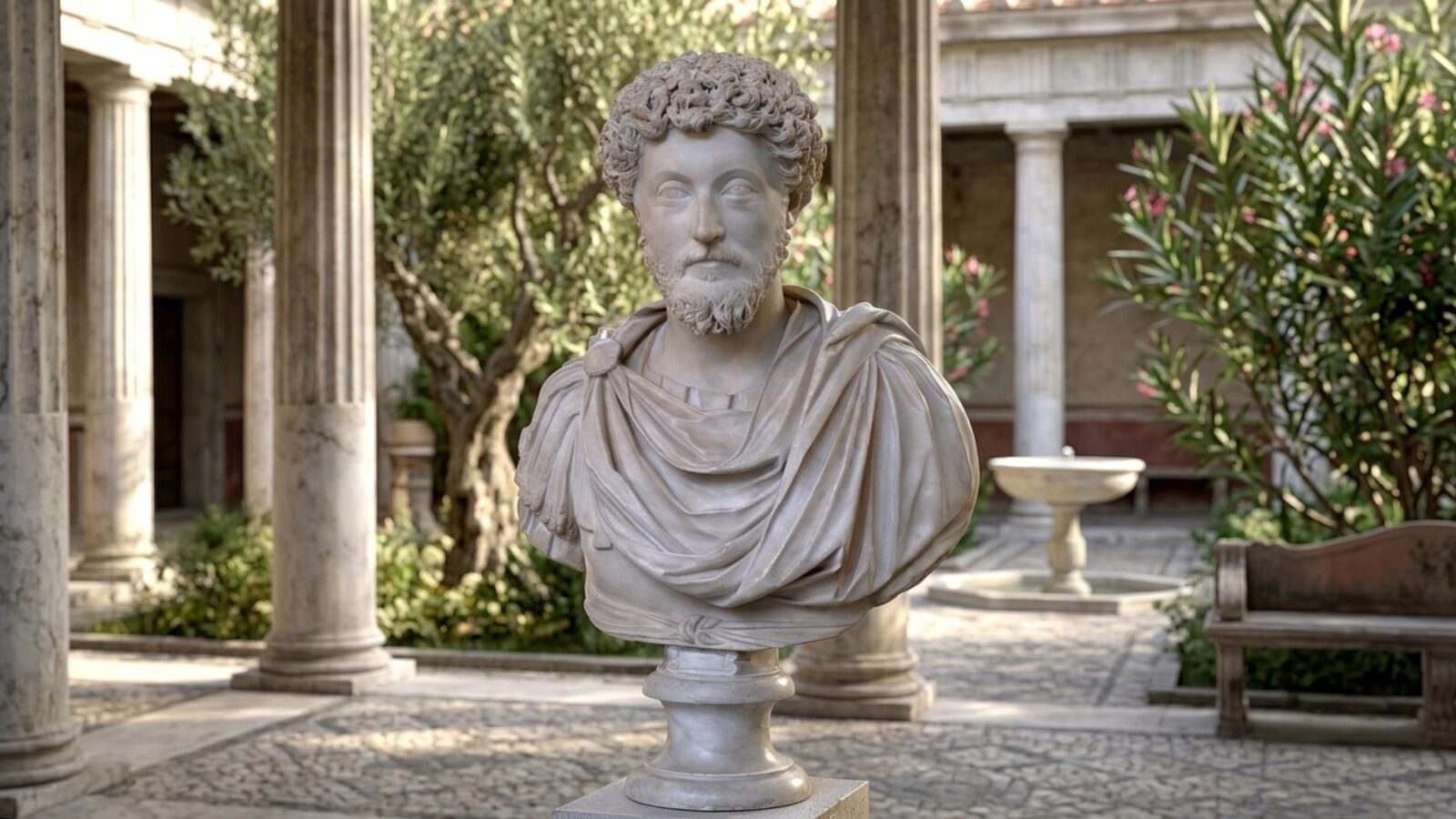
Marcus Aurelius ruled Rome from 161 to 180 AD. During his reign, he had to contend with plague and years of grinding war along the Danube. In 175, one of his own generals declared himself emperor.
Through it all, Marcus kept a private notebook. We call it Meditations today, though he never meant for anyone else to read it.
He wrote to counsel himself through the stresses and challenges of ruling over an empire. He coached his own mind to stay steady while the external forces and many people refused to cooperate, and five of his core ideas still work if you’re tired of burning energy on things you can’t control.
1. Separate Your Perception from External Reality
The Stoics placed most suffering in our judgments about events. A canceled flight is a canceled flight.
The misery shows up a few seconds later, when your brain starts narrating how this always happens to you and how the whole trip is wrecked and why you should have booked the earlier one. You wrote that story yourself.
“If thou art pained by any external thing, it is not this thing that disturbs thee, but thy own judgment about it. And it is in thy power to wipe out this judgment now.” – Marcus Aurelius, Meditations.
Marcus wrote this down as an instruction to himself. The disturbance lived in his own head, which was the one territory where he had complete authority. The practical move is simple, though it takes discipline. When a setback hits, stop and separate the bare facts from your commentary.
“This ruined my week” becomes “This happened, and now I pick my response.” The event stays the same size based on facts, not emotions, because you’ve quit feeding it.
2. Recognize the Dichotomy of Control
A huge share of daily stress comes from trying to run things that were never ours to run. What other people think of you sits on that list. So does every outcome that hasn’t happened yet.
Pouring effort into those areas is like bailing out a boat with a fork. The Stoic fix is to draw a hard line between what is within your control and what isn’t, and then actually respect it.
“Begin the morning by saying to thyself, I shall meet with the busy-body, the ungrateful, arrogant, deceitful, envious, unsocial… I can neither be injured by any of them, for no one can fix on me what is ugly.” – Marcus Aurelius, Meditations.
Notice the tone. Marcus expected to deal with irritating people before breakfast, and he wasn’t sentimental about it. He just refused to hand those people control over his character. Their rudeness was their problem, and his conduct was his.
Apply this by aiming your full effort at your own work and your own reactions. You can argue, persuade, prepare, and plan, and you should, because influence is real and worth using. Ownership is another matter. Treating someone else’s choices as your responsibility makes frustration show up, usually by lunchtime.
3. Practice Objective Reframing (Amor Fati)
Amor fati is Latin for “love of fate.” Friedrich Nietzsche made the phrase famous centuries later, yet the attitude behind it shows up throughout Meditations.
The Stoic accepts what has already happened, quickly and without a long argument. Wishing a fixed reality were different is about as productive as yelling at the weather.
“Love that only which happens to thee and is spun with the thread of thy destiny. For what is more suitable?” – Marcus Aurelius, Meditations.
Marcus also wrote that the mind can turn a hindrance into an aid, so the obstacle on the road ends up helping us along it. Ryan Holiday later built a bestseller around that passage. When plans collapse, ask what the mess lets you practice. Maybe patience. Maybe resourcefulness, or the kind of courage you’ve been dodging.
A delayed product launch can teach you to deliver bad news well. A layoff can force a skills reset you’d put off for years, and that reset could outlast the new job.
4. Reclaim Power from Your Internal Narrative
Anxiety needs your cooperation to stick around. It feeds on rehearsed arguments and worst-case forecasts, and it starves fast when you stop supplying them.
“Take away thy opinion, and then there is taken away the complaint, ‘I have been harmed.’ Take away the complaint, ‘I have been harmed,’ and the harm is taken away.” – Marcus Aurelius, Meditations.
That’s one of the boldest claims in Stoic philosophy, and plenty of people find it irritating on first read. Bad things obviously happen. Marcus knew that better than almost anyone. His point was narrower and more useful: the label “I have been harmed” is something we attach, and we can decline to attach it.
Watch for the moment your mind spins out hypothetical disasters at 2 a.m. Interrupt it with one blunt question: “Is this happening right now, or am I building it in my head?” Usually, you’re building it mentally. The best thing you can do about facing a problem the next day is to get some sleep. Catching that early can save you a whole day lost to a problem that never arrives.
5. Zoom Out for Perspective (The View from Above)
A problem looks enormous when it fills your whole field of vision. Step back far enough, and it shrinks. Marcus returned to this idea again and again. He kept reminding himself how short a single life is next to the span of history.
“Think of the universal substance, of which thou hast a very small portion… and of universal time, of which a short and indivisible interval has been assigned to thee.” – Marcus Aurelius, Meditations.
The historian Pierre Hadot called this exercise “the view from above.” Try it by picturing the problem, then pulling back to your street, your city, the continent, the planet, and a few thousand years of human history.
From up there, the tense email thread at work is barely visible. Your duties still matter when you come back down. They stop weighing more than they should.
Conclusion
Marcus had better excuses than most of us for feeling overwhelmed. He governed an empire through epidemic and war, and his notebook shows him working on his own mind daily, scolding himself when he slipped and starting over.
None of these five practices is complicated. The hard part is using them on a bad Tuesday when you’re tired and someone was just rude to you.
Pick one principle and use it for a week. Start with the fact-versus-story split, since it takes only a few seconds, and you’ll get plenty of chances to practice it before Friday.