Talent helps. So does luck, and so does knowing the right people at the right time, but none of it lasts long without self-control. The ability to govern your impulses and your moods is what turns good intentions into results you can repeat. Most people know this already. Very few act on it when it counts.
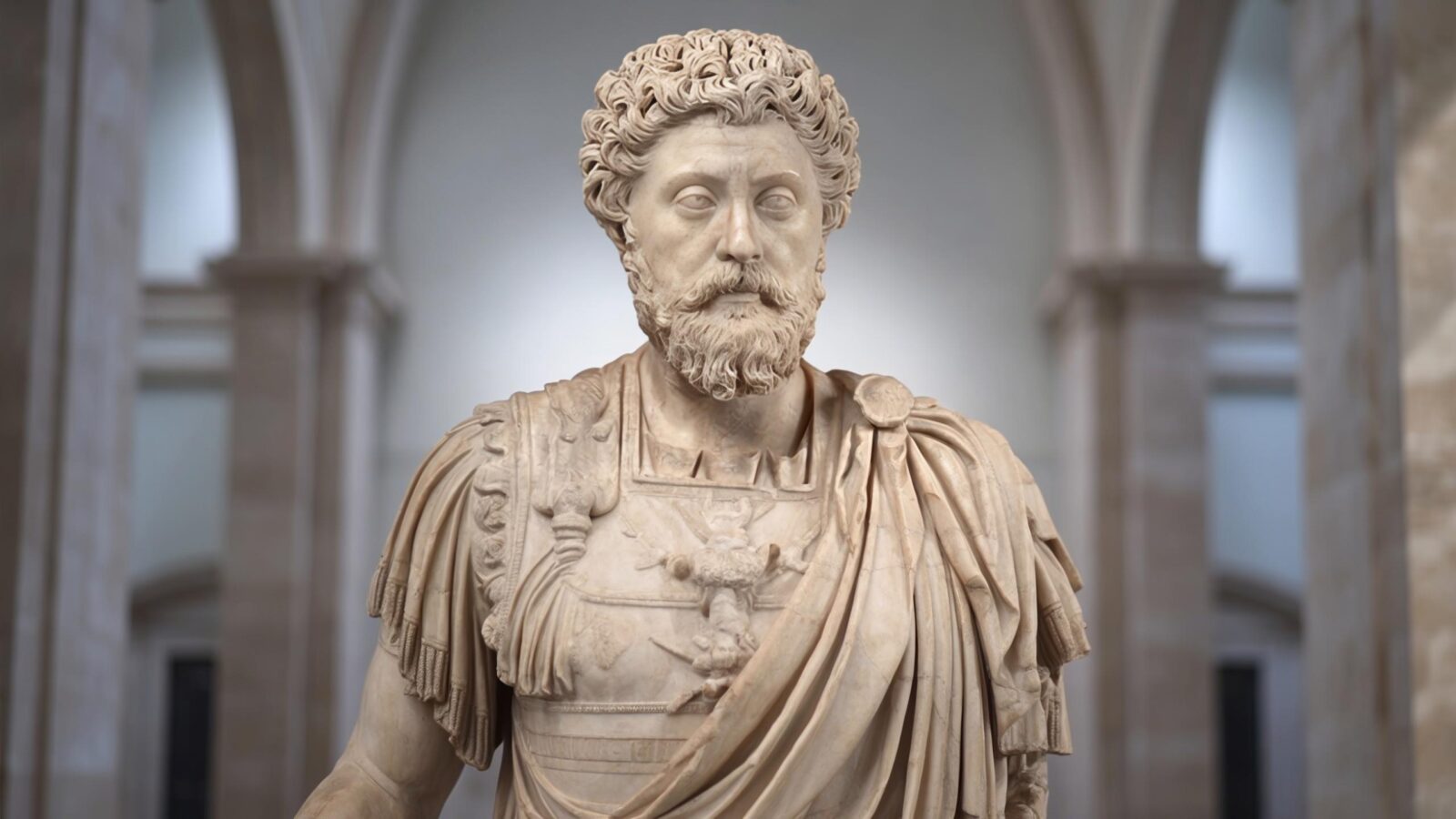
Marcus Aurelius ruled the Roman Empire from 161 to 180 AD. During those years, he kept a private journal, written in Greek, that we now call Meditations.
He never meant for anyone else to read it. The notes are instructions to himself about staying calm while running an empire, fighting wars on the northern frontier, and living through a plague.
The quotes below come from George Long’s English translation of Marcus Aurelius’ own words. Each one reinforces a lesson in self-control that still holds true today.
1. Master Your Internal Perspective
“If thou art pained by any external thing, it is not this thing that disturbs thee, but thy own judgment about it. And it is in thy power to wipe out this judgment now.” (Marcus Aurelius, Meditations, Book 8.47)
Self-control starts with drawing a line between what happens to you and how you respond to it. You can’t control the market or the traffic on your morning commute. Other people will do what they want.
Your interpretation of those events belongs to you. Marcus noticed that a setback rarely hurts on its own, and the real pain usually comes from the story we tell ourselves about it.
Once you see that line clearly, you stop spending energy on things you have no say over. That energy goes into the one place where you actually have authority.
He returned to this idea many times throughout the journal, often in nearly the same words. Anyone who repeats advice to himself that often probably finds it hard to follow.
2. Recognize That Mental Reactions Cause More Harm Than the Trigger
“Consider how much more pain is brought on us by the anger and vexation caused by such acts than by the acts themselves, at which we are angry and vexed.” (Marcus Aurelius, Meditations, Book 11.18)
A quick reaction often does more damage than whatever set it off. An insult is over in seconds. The angry reply you fire back can cost you a friendship or a job. Money works the same way. A single bad trade is survivable, but trying to win it back right away out of frustration is how a small loss turns into a large one.
Discipline buys you a pause. That gap between the trigger and your response gives your reasoning a chance to catch up with your temper before you do something you’ll regret.
Marcus wrote this line as a man who knew betrayal firsthand. In 175 AD, one of his most trusted generals, Avidius Cassius, declared himself emperor after a false report of Marcus’s death, and the revolt collapsed within months when Cassius was killed by his own officers.
3. Convert Impediments into Advantages
“For the mind converts and changes every hindrance to its activity into an aid; and so that which is a hindrance is made a furtherance to an act; and that which is an obstacle on the road helps us on this road.” (Marcus Aurelius, Meditations, Book 5.20)
When something goes wrong, an undisciplined mind panics or starts complaining. A disciplined mind looks at the problem and asks what it can do with it. Setbacks force you to practice patience. They also push you toward solutions you’d never have looked for, which is why a failed project often teaches more than an easy win.
Nobody has to pretend hardship feels good. You refuse to let it end your progress, and you treat the obstacle as practice. Marcus had plenty of material to practice on. He spent much of the last decade of his life on military campaigns along the Danube, and he died in 180 AD while still on campaign.
4. Overcome Morning Hesitation and Own Your Duty
“In the morning, when thou risest unwillingly, let this thought be present: I am rising to the work of a human being. Why then am I dissatisfied if I am going to do the things for which I exist and for which I was brought into the world? Or have I been made for this, to lie in the bedclothes and keep myself warm?” (Marcus Aurelius, Meditations, Book 5.1)
One of the most powerful men in the ancient world struggled to get out of bed. That detail is oddly comforting. Discipline didn’t come easily to him either.
Success depends on doing the work, whether you feel like it or not. Self-control means ignoring the snooze button and the urge to push a hard task to tomorrow and starting the work in front of you.
Marcus tied his daily duties to his purpose as a human being. When the work connects to a bigger reason, you stop waiting for motivation. Mornings set the tone. Beat the pull of a warm bed first thing in the morning, and the next hard choice of the day gets a little easier.
5. Judge Yourself by Your Own Standards
“I have often wondered how it is that every man loves himself more than all the rest of men, but yet sets less value on his own opinion of himself than on the opinion of others.” (Marcus Aurelius, Meditations, Book 12.4)
Discipline that runs on praise breaks easily. When the compliments stop, so does the effort. Marcus spotted a contradiction in how people think. We care about ourselves more than anyone else, yet we let strangers decide how we feel about our own lives.
Real self-control means setting your own bar. You judge your effort against your own goals and values, and the outside chatter gets a lot quieter. Feedback still has its place. Just don’t hand the decision to anyone else about whether you keep going.
Conclusion
Self-control takes practice. Some days you’ll handle a setback well, and other days you’ll snap at someone over nothing. Marcus Aurelius tested these ideas under real pressure, and his notes on judgment and restraint still hold up almost two thousand years later. So does his advice on duty.
Pick one lesson and try it this week. Start with the pause before you react, since it’s the easiest one to test in a single afternoon.