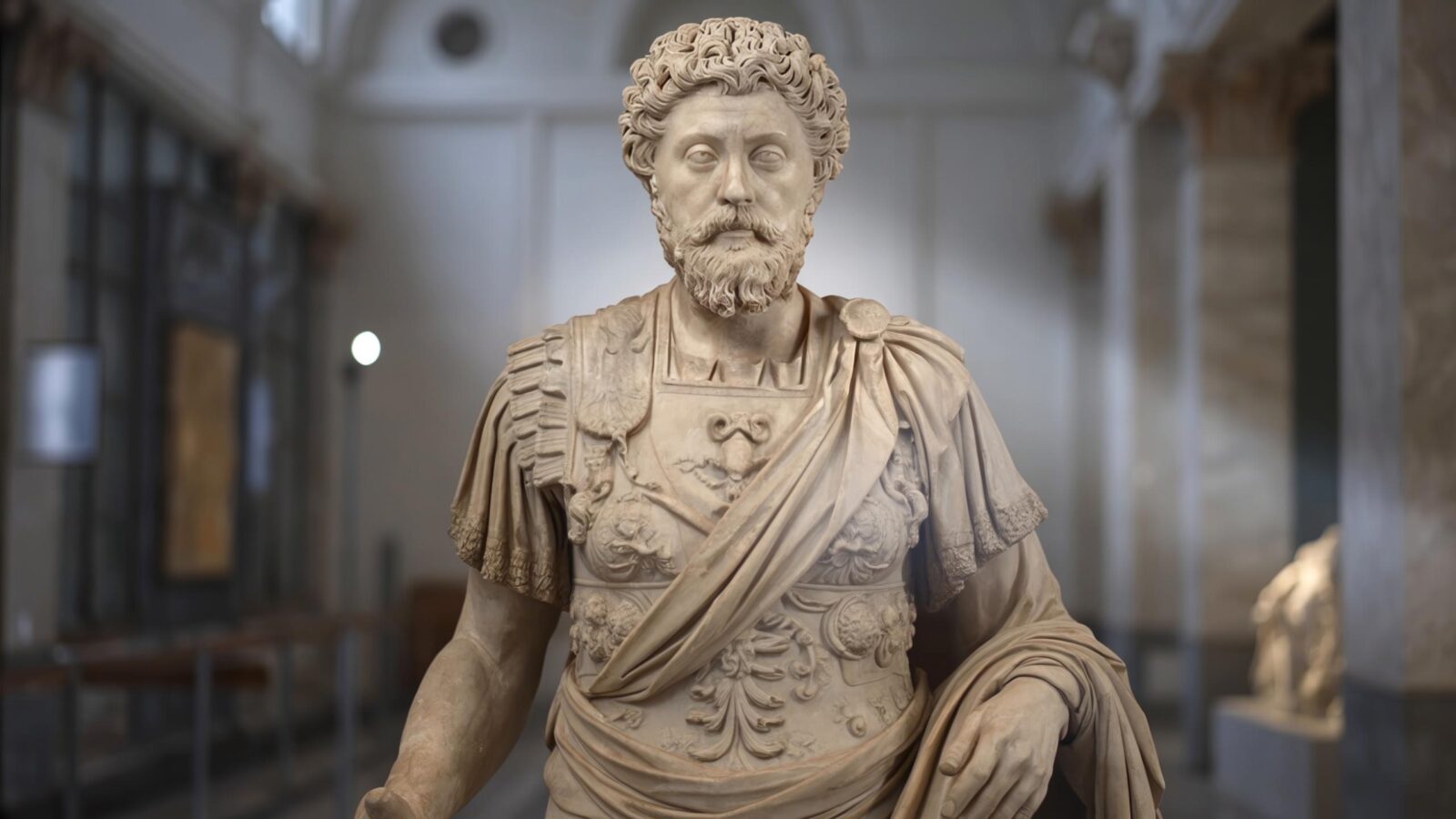
Marcus Aurelius ruled Rome from 161 to 180 AD and spent a good part of that reign on military campaigns along the Danube. Along the way, he wrote notes to himself in Greek.
Those notes became the book we call the Meditations. He doesn’t seem to have written them for an audience, which is probably why they read so bluntly.
The most powerful man in the Roman world barely mentions his wealth or his title in the book. He judged people, himself included, by what was going on inside.
In Stoic terms, a high-value person has self-mastery and integrity and won’t trade either for applause. The five signs below show what that looks like.
1. You Don’t Waste Time Seeking External Validation
A lot of people spend the day checking on their own reputation. They count who liked the post and replay the boss’s face from the morning meeting, then lie awake over a comment from someone they barely know. Marcus would have called that handing your peace of mind to strangers.
The high-value person knows their worth without a scoreboard. Criticism can sting for an afternoon, but it doesn’t get to steer.
Marcus made the argument by looking at beautiful things. “Everything which is in any way beautiful is beautiful in itself, and terminates in itself, not having praise as part of itself. Neither worse than nor better is a thing made by being praised.” (Marcus Aurelius, Meditations 4.20)
In the same passage, he asks whether an emerald gets worse because nobody praises it. Gold doesn’t, and neither does a flower.
Your character works the same way. Honesty and hard work count whether anyone sees them or not, and when someone only does the right thing for an audience, people usually figure it out. For one week, do your best work without telling anyone about it and notice how often you’re tempted to bring it up.
2. You Control Your Mind, Not External Events
Markets drop. Your flight gets canceled, and somebody at work takes credit for a project you worked on for months. You get no vote on any of it. Marcus dealt with a plague and a general who declared himself emperor. His answer was to pull his energy back to the one place it could do some good.
That place was his own judgment. “If thou art pained by any external thing, it is not this thing that disturbs thee, but thy own judgment about it. And it is in thy power to wipe out this judgment now.” (Marcus Aurelius, Meditations 8.47)
Every bad event comes in two parts. There’s the thing that happened, and then there’s the story you tell yourself about it on the drive home.
You can’t rewind the first part. The second part is yours to edit. Traders learn this fast, since a losing trade stings a lot more once you start calling yourself an idiot for taking it.
3. You Focus on Action Over Talking About Virtue
Some people love talking about ethics. They quote Seneca at dinner and post motivational lines on LinkedIn, then cut someone off in the parking lot ten minutes later.
Marcus didn’t have much patience for this, and he aimed most of that impatience at himself. In Book 10, he gave himself a direct order. “No longer talk at all about the kind of man that a good man ought to be, but be such.” (Marcus Aurelius, Meditations 10.16)
Value shows up in small choices that nobody films. You pay back the $40 before your friend has to ask for it, and you keep your promise even when it becomes inconvenient. The server at a diner gets the same courtesy you’d give a CEO. You admit a mistake at work before anyone else finds it.
None of this wins awards. Some weeks, it feels like nobody notices at all.
4. You Maintain Emotional Sovereignty
An insult only lands if you agree to accept it as valid. Epictetus taught a version of this, and in Book 1, Marcus thanks his mentor, Rusticus, for lending him Epictetus’s discourses.
High-value people understand that offense happens inside their own heads. Someone can be rude to you. Whether you feel harmed depends on what you decide it means.
Marcus put it into a few lines that are easy to memorize. “Take away thy opinion, and then there is taken away the complaint, ‘I have been harmed.’ Take away the complaint, ‘I have been harmed,’ and the harm is taken away.” (Marcus Aurelius, Meditations 4.7)
None of this makes you a doormat. You can still set boundaries and walk away from people who keep treating you badly.
You do those things with a clear head. Somebody runs by their emotions, sends the angry email at 11 p.m., and apologizes the next morning, while the person in charge of theirs leaves it in drafts until after breakfast.
5. You Act for the Common Good Without Needing Credit
Marcus saw people as members of one community, like bees in a single hive. What hurts the group sooner or later hurts each person in it.
He boiled the idea down to a single line. “That which is not good for the swarm, neither is it good for the bee.” (Marcus Aurelius, Meditations 6.54)
He was harder on people who help and then hang around waiting for a thank-you. “When thou hast done a good act, and another has received it, why dost thou look for a third thing besides these, as fools do, either to have the reputation of having done a good act or to obtain a return?” (Marcus Aurelius, Meditations 7.73)
The high-value person helps because the work needs to be done. They train the new hire properly and put the shopping cart back in an empty lot where nobody would notice the difference.
Conclusion
None of these signs requires money or a title. Marcus had more of both than anyone in Rome and still graded himself on a completely different scale.
His notebook keeps circling back to a short list of instructions, written by a man who seems to have needed them as much as anyone. He told himself to stop chasing praise, and over and over, he told himself that his own judgments caused most of his distress.
He also told himself where to look. “Look within. Within is the fountain of good, and it will ever bubble up, if thou wilt ever dig.” (Marcus Aurelius, Meditations 7.59)
Pick one of the five signs and practice it this week. Start with the one that made you a little defensive while you were reading.