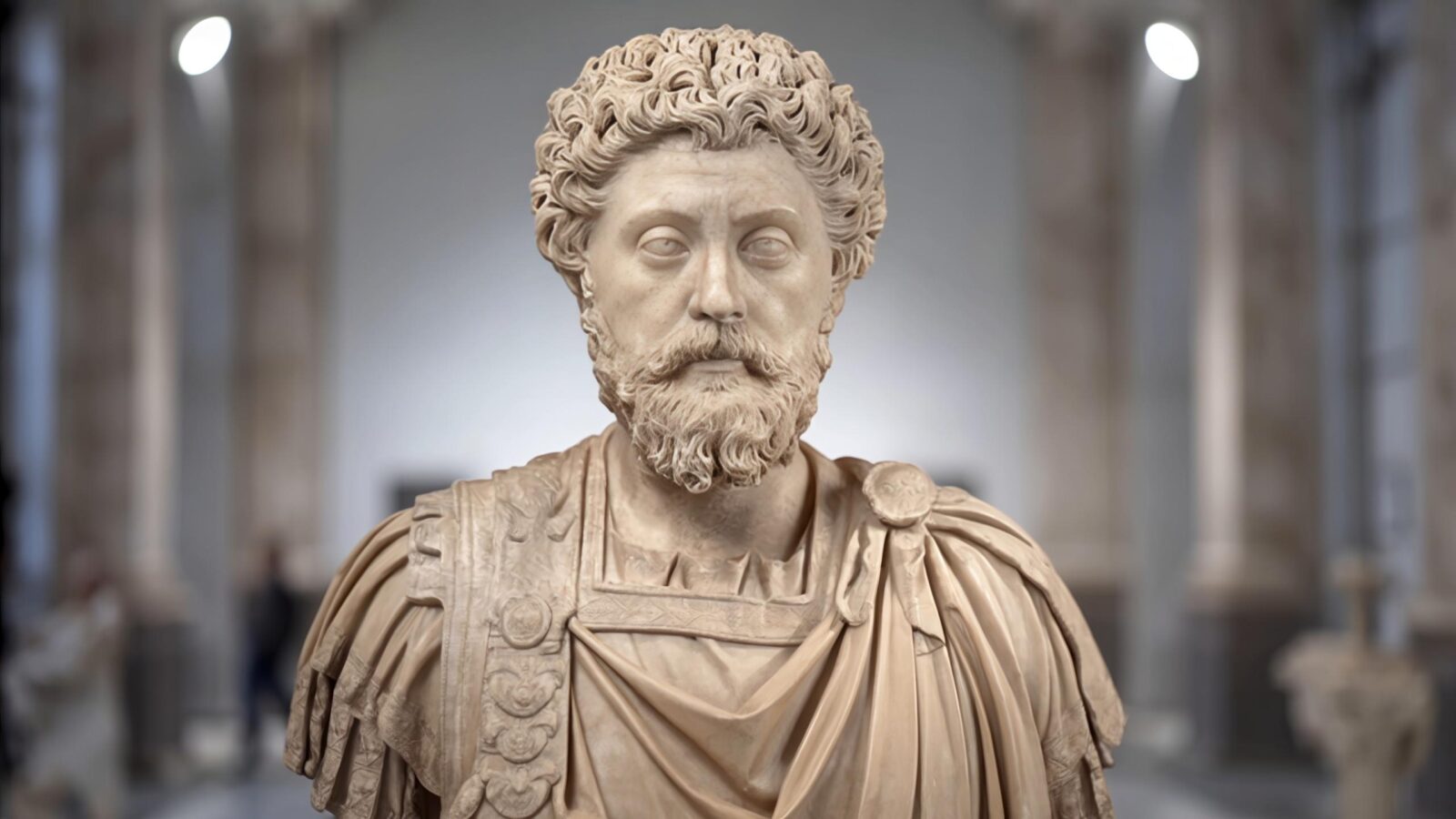
Marcus Aurelius ruled the Roman Empire from 161 to 180 AD. His most enduring work was a private journal he never intended to publish, which we now know as Meditations.
A lot of his advice is about subtraction. He wrote again and again about dropping the mental weight people carry out of habit, and the quotes below are a translation of his actual words.
1. Let Go of Other People’s Opinions
Living for approval is exhausting. When your mood depends on what people think of you, strangers end up running your day. Marcus Aurelius found this habit odd. People love themselves above everyone else, he noticed, and still trust outside judgment over their own.
“I have often wondered how it is that every man loves himself more than all the rest of men, but yet sets less value on his own opinion of himself than on the opinion of others.” – Marcus Aurelius
A better standard is your own conduct. If you acted honestly and did the work well, a stranger’s criticism should have very little meaning to you.
He also saw how much energy gets wasted watching the neighbors. “How much trouble he avoids who does not look to see what his neighbor says or does or thinks, but only to what he does himself, that it may be just and pure.” – Marcus Aurelius
2. Let Go of Trying to Control External Events
Stoic philosophy splits the world into two piles. Your choices and actions go in one pile, and everything else (the weather, the market, your boss’s mood) goes in the other.
Most frustration comes from trying to control the second pile. Marcus Aurelius believed that the sting we feel usually begins with how we judge an event.
“If thou art pained by any external thing, it is not this thing that disturbs thee, but thy own judgment about it. And it is in thy power to wipe out this judgment now.” – Marcus Aurelius
That puts a surprising amount of power back in your hands. You may be stuck in the situation, yet the story you tell yourself about it is still yours to edit mentally.
Try a quick test the next time something sets you off. Ask whether you can change it, and if the answer is no, put your effort into your response.
3. Let Go of Worry About the Future
Anxiety lives in tomorrow. People lose sleep over problems that haven’t arrived and often never do. Marcus Aurelius gave a plain reason to stop borrowing trouble. Whatever good sense you use today will still be with you when the future arrives.
“Let not future things disturb thee, for thou wilt come to them, if it shall be necessary, having with thee the same reason which now thou usest for present things.” – Marcus Aurelius
Planning still has its place. Rehearsing a disaster over and over in your head is a different activity, and it makes you suffer twice for something that may never happen.
He returned to the same point when writing about how short life is. “Every man lives only this present time, which is an indivisible point, and that all the rest of his life is either past or it is uncertain.” – Marcus Aurelius
4. Let Go of Anger and Grudges
Anger feels justified in the moment. It also has a habit of making a bad situation worse. Marcus Aurelius dealt with rebellion and plenty of difficult people during his reign. Even so, he concluded that an angry reaction tends to do more harm than the thing that caused it.
“How much more grievous are the consequences of anger than the causes of it.” – Marcus Aurelius
Think back to a time you snapped at someone and regretted it later. The original offense was probably small next to the cleanup you had to do afterward.
He offered a simple alternative for dealing with people who wrong you. “The best way of avenging thyself is not to become like the wrongdoer.” – Marcus Aurelius
5. Let Go of Longing for What You Don’t Have
Modern life is built to remind you of what you lack. Ads and social feeds make it easy to believe the next purchase will finally do the trick.
Marcus Aurelius pushed back on this nearly two thousand years ago. He suggested looking at what you already own and imagining how badly you’d want it if it disappeared.
“Think not so much of what thou hast not as of what thou hast: but of the things which thou hast, select the best, and then reflect how eagerly they would have been sought, if thou hadst them not.” – Marcus Aurelius
This works well as a short daily exercise. Picture losing your health or your home for a moment, and your current life starts looking pretty good.
Wanting more isn’t wrong. Endless wanting is the problem, because it keeps your attention fixed on a future that keeps moving away from you.
Conclusion
Marcus Aurelius had more wealth and power than almost anyone alive in his era. His journal shows a man who still had to work at staying calm, and he did it mostly by putting things down.
Pick one of these five and practice it this week. Stop checking what others think, or catch yourself the next time you rehearse a future problem, and see how much lighter the days feel.