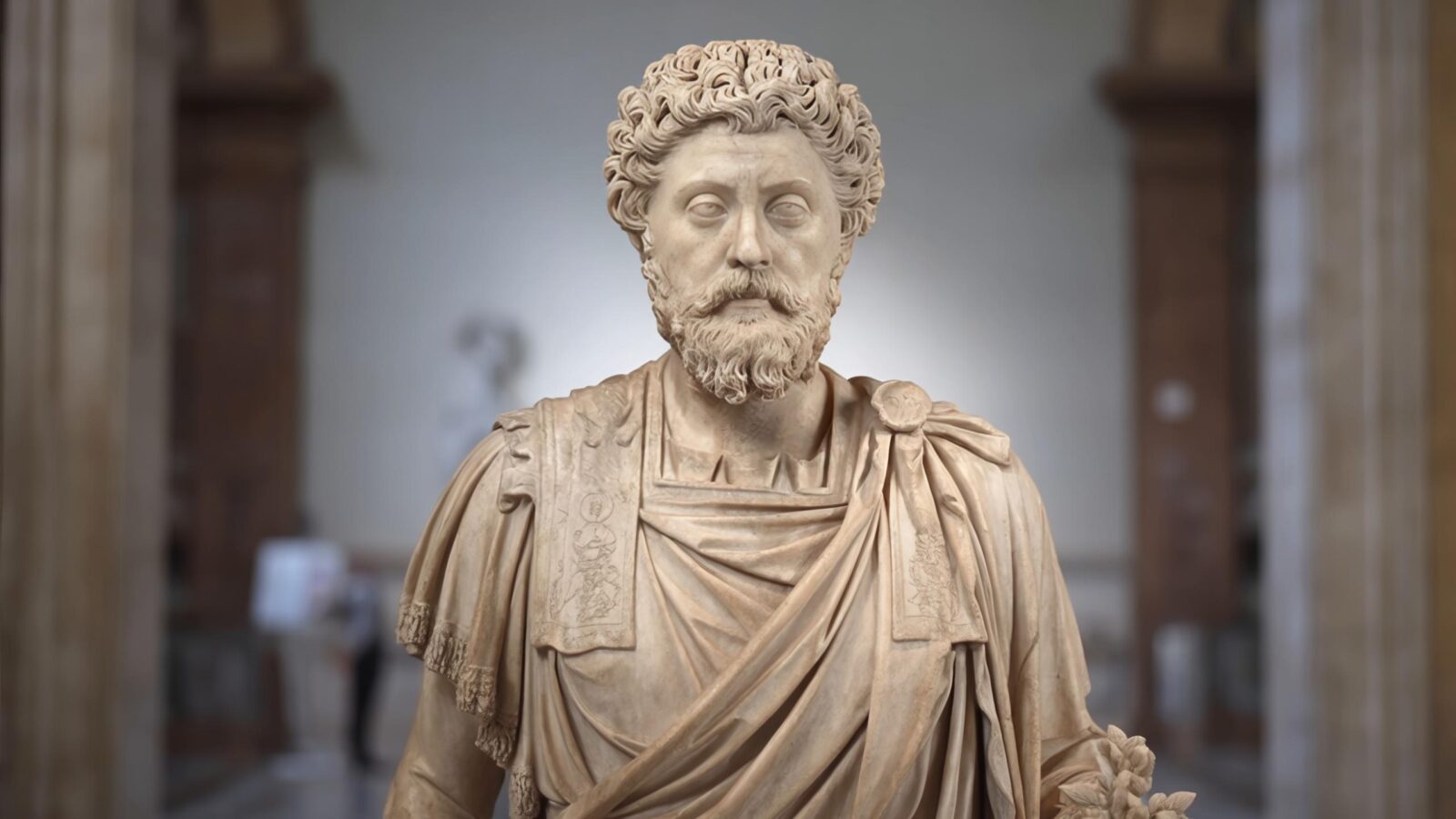
Marcus Aurelius ruled Rome from 161 to 180 AD. He also left behind one of the most widely read books of Stoic philosophy, which he never intended anyone else to see.
Meditations started as private notes. He wrote parts of it in army camps along the Danube frontier, in the middle of long wars, with plague moving through the empire and political trouble back home that rarely let up for long.
The Stoics had a specific idea of what it meant to be soft. A soft person lets comfort and impulse make the decisions, along with whatever other people happen to think and whatever mood, emotions, or desires show up that day.
Physical strength has little to do with it. Self-discipline, in the Stoic sense, means pulling those decisions away from your feelings and putting reason back in charge. Marcus Aurelius spent years practicing exactly that mental self-discipline and explaining his thinking in his journal.
1. Get Out of Bed on the First Try
An emperor with the whole Roman world under him still had mornings when he didn’t want to get up. Book 5 opens with him arguing with himself about it.
Marcus Aurelius wrote, “In the morning when thou risest unwillingly, let this thought be present: I am rising to the work of a human being… Or have I been made for this, to lie in the bed-clothes and keep myself warm?” The question is half a joke and half a scolding. He knew the answer.
Motivation usually shows up after you start moving. If you wait to feel ready, the blankets win most days. So make the first decision of the day a hard one. Get up on the first alarm and put your worst task at the top of the list, before your mind has a chance to start bargaining with you about why later would be better.
2. Spend Your Energy Only on What You Control
Stoicism rests on the dichotomy of control. Your actions, thoughts, habits, and responses are yours to direct. Other people’s opinions, the weather, and what happened last year are beyond your control.
Marcus Aurelius wrote, “Everywhere and at all times it is in thy power piously to acquiesce in thy present condition, and to behave justly to those who are about thee.” He was dealing with war and plague when he wrote lines like this. He still found something within his power every single day.
Complaining feels productive. It isn’t, and every minute you spend resenting traffic or a rude email is a minute that could have gone into your own work. Accept the situation as it actually is. Then put your effort where it can make a difference.
3. Put a Gap Between Impulse and Action
Marcus believed that much of what hurts us comes from the opinion we form about an event. Once he saw that, he had a way to handle his own temper.
“Take away thy opinion, and then there is taken away the complaint, ‘I have been harmed.’ Take away the complaint, ‘I have been harmed,’ and the harm is taken away,” wrote Marcus Aurelius. An insult only lands as deep as you let it.
Snapping at people is one sign of an untrained mind. Quitting the moment you get tired is another. In both cases, a passing feeling led to a decision that should have gone through your judgment first.
The practical fix is a pause. Before you react, ask whether the urge is reasonable or whether you are just tired and irritated and looking for the easy way out.
4. Use Obstacles as Training
Most people read difficulty as a sign to quit. The Stoics saw it as the place where character gets built, and Marcus came back to this idea more than once.
Marcus Aurelius wrote that “the mind converts and changes every hindrance to its activity into an aid.” A few words later, he put it more plainly: “And that which is an obstacle on the road helps us on this road.”
Discipline goes looking for friction. A bad week at work or an uncomfortable conversation you’ve been dodging gives you a chance to practice patience under pressure.
When something blocks your path, ask yourself which quality it lets you exercise. Patience is a common answer. So is courage, and sometimes plain stubbornness.
5. Choose Some Hardship on Purpose
Book 1 of Meditations is a list of debts. Marcus goes through the people who raised and taught him, names what he learned from each, and finds that a surprising amount of it concerns simple living.
Marcus Aurelius credited his tutor with teaching him “to endure labor, and want little, and work with my own hands.” He thanked his mother for “simplicity in my way of living, far removed from the habits of the rich.” This is from a man who would one day rule the empire.
Comfort you never test slowly turns into a need. A little voluntary discomfort keeps that from happening. Take a cold shower. Do the workout you’d rather skip, or wait a day before buying the thing you want right now. Your mind learns that you can go without ease and be fine.
6. Keep Your Mortality in View
Marcus returned to the shortness of life again and again in his notes. Later writers would call this practice memento mori, and he used it as a weapon against procrastination.
Marcus Aurelius wrote, “Do not act as if thou wert going to live ten thousand years. Death hangs over thee. While thou livest, while it is in thy power, be good.” Those three short sentences cut straight through the excuse that there will always be time later.
Laziness depends on the belief that tomorrow is guaranteed. Nobody gets that guarantee, and most of us know it without ever acting on it. Write down the one task you keep putting off. Then do it today, while it is still in your power.
Conclusion
Marcus Aurelius held more power than anyone in the Roman world, and his private notes show him wrestling with the same small temptations everyone faces. He wanted to stay in bed. He wrote long passages talking himself out of anger.
What set him apart was the daily habit of correcting himself in writing. You can do the same with a notebook and ten minutes each evening, listing where you gave in to comfort that day and where you held the line. Start tomorrow morning with the alarm. Put your feet on the floor the first time it goes off.