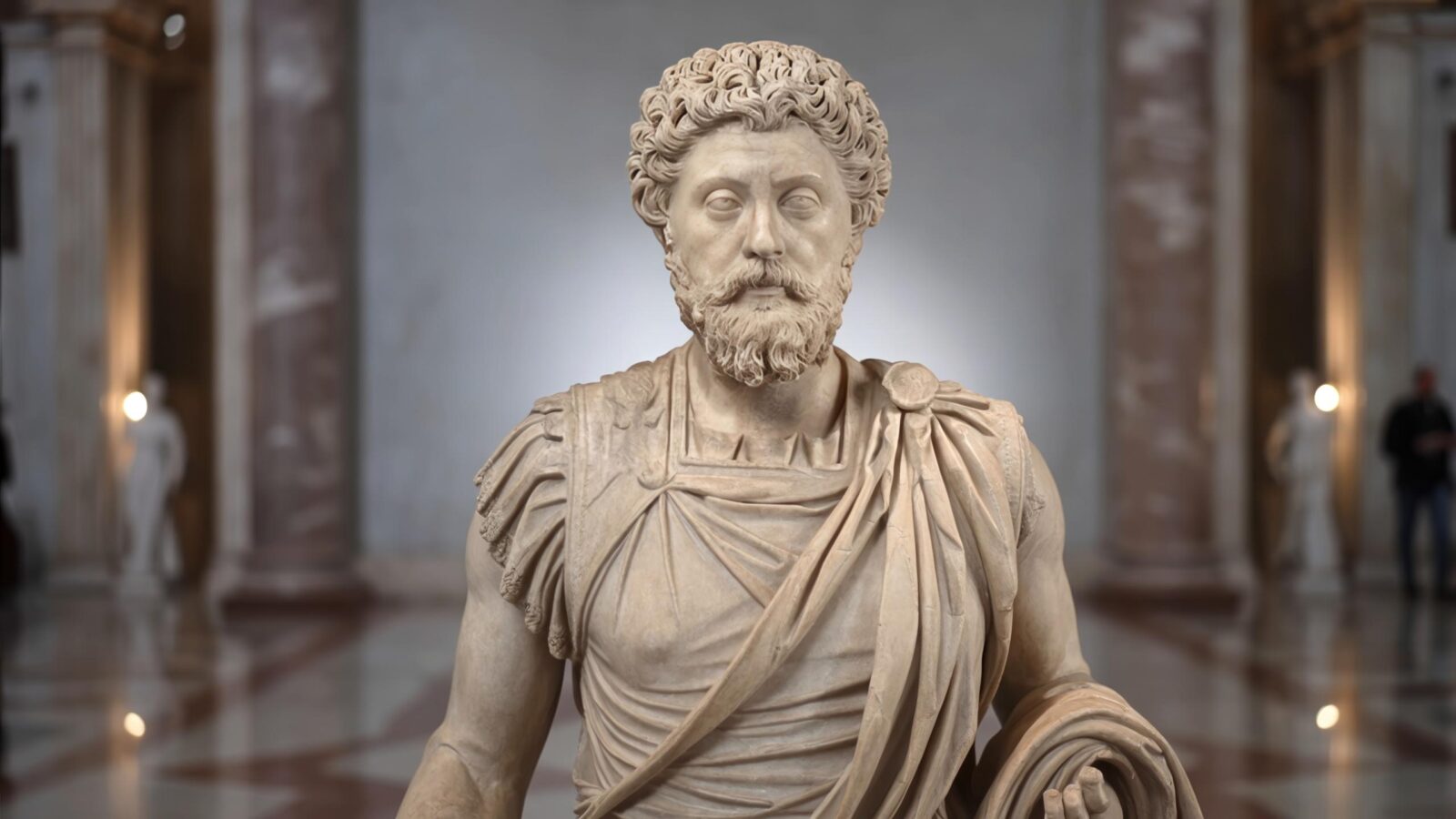
Marcus Aurelius had obligations that most people will never face. He governed Rome during war, disease, political conflict, and private grief, yet his personal writings return again and again to the same discipline: keeping the mind from being dragged around by events.
The art of not caring is often misunderstood. Marcus Aurelius was not urging people to become detached from family, duty, or moral conduct. He was teaching them to stop giving their peace away to matters they could not command.
His journal, Meditations, was written as private instruction. Its pages offer a stoic way to handle irritation, criticism, disappointment, and fear. A person can care deeply about doing what is right without becoming consumed by every outcome.
1. Put Your Attention on Your Own Conduct
“Thou hast power over thy mind, not outside events. Realize this, and thou wilt find strength.” Marcus Aurelius
People lose a great deal of energy fighting facts after they have already arrived. A flight is canceled. Someone behaves badly. A plan fails despite good preparation. The mind starts arguing with reality as though anger could reverse what happened.
Marcus Aurelius brought attention back to what belonged to him. He could choose whether to act honestly, whether to complain, and whether to meet trouble with self-control. The event itself might remain unpleasant, but his response was still his own.
This is where selective care begins. Care about the work you do, the promises you make, and the way you treat people. Let go of the demand that the world give you the exact result you wanted.
That takes practice because people naturally fixate on outcomes. They want a particular response, a particular reward, or a guarantee that effort will pay off. Marcus Aurelius would say that effort deserves your attention, while the final result belongs partly to circumstances.
When a problem appears, ask what action is available right now. Make the call, finish the work, apologize, prepare better, or wait patiently. If there is nothing useful to do, stop replaying the problem in your head.
2. Refuse to Let Other People’s Opinions Run Your Life
“How much trouble he avoids who does not look to see what his neighbor says, does, or thinks.” Marcus Aurelius
Approval feels good, and criticism can sting. Both become dangerous when a person starts treating the crowd as the final judge of their worth. Public opinion is unstable. It can turn into a rumor, a misunderstanding, or a preference unrelated to the truth.
Marcus Aurelius wrote about the strange habit of valuing another person’s opinion above one’s own judgment. People know their motives, efforts, and principles better than casual observers do. Yet they may still spend a day feeling miserable over a cutting remark from someone they would never ask for advice.
Ignoring every opinion would be foolish. A trusted friend, teacher, spouse, or colleague may point out a real weakness. Their criticism deserves a fair hearing when it is specific and grounded in good judgment.
The rest can be left where it belongs. A rude comment, gossip, or online insult does not become true because it is repeated. You do not need to defend yourself against every judgment made by people who have not lived your life or carried your responsibilities.
Live by standards you can explain to yourself in private. If you have been fair, diligent, and honest, you can sleep well even when someone disapproves. That is a steadier source of confidence than praise.
3. Separate the Event From the Story You Tell About It
“Take away thy opinion, and then there is taken away the complaint, ‘I have been harmed.’ Take away the complaint, ‘I have been harmed,’ and the harm is taken away.” Marcus Aurelius
A great deal of suffering comes after the original event. Someone cancels plans, and the mind decides it’s proof of rejection. A mistake at work becomes evidence of failure. A difficult conversation becomes proof that a relationship is ruined.
Marcus Aurelius urged himself to look at events plainly. The canceled plans are real. The claim that nobody respects you is an interpretation, and it may be wrong. The work mistake happened, yet it does not automatically define your ability or your future.
Plain language can calm an emotional reaction. Say “The meeting was moved” instead of “My entire day is destroyed.” Say, “That person spoke harshly,” instead of deciding that you have been attacked.
This approach does not ask anyone to deny pain. Grief hurts. Injustice exists. Physical illness and loss carry real weight. Still, the mind can make pain worse by adding a long list of predictions, resentments, and imagined disasters.
Give yourself time before deciding what an event means. Facts deserve attention. Your first emotional explanation may deserve skepticism. That pause can prevent an angry message, a reckless decision, or hours spent upset over something that later looks very different.
4. Keep Small Troubles at Their Proper Size
“Consider the infinite abyss of the past, and the infinite abyss of the future, in which all things disappear.” Marcus Aurelius
A minor problem can take over the mind when it is viewed too closely. A delayed reply, an embarrassing moment, a traffic jam, or an insult may feel enormous for an hour. Time usually reduces many of these events to little more than a passing annoyance.
Marcus Aurelius often wrote about change, death, and the short span of human life. He was not trying to create despair. He used the passing nature of fame, possessions, and conflict to cut vanity down to size.
That perspective is useful when the mind is making too much of a temporary setback. Ask whether the issue will matter next month. Ask whether it will matter next year. Some problems deserve serious attention, especially those involving health, family, safety, money, and commitments.
Other problems deserve far less space in your head. A stranger’s bad mood does not need to follow you home. A missed opportunity does not need to become a permanent story about what your life could have been.
Time moves on without asking whether you have finished worrying. You can choose to spend your limited attention on a real duty, a person you love, or the work in front of you. That choice is often enough to break the spell of a trivial concern.
5. Stay With the Task in Front of You
“Do every act of thy life as if it were the last.” Marcus Aurelius
The past cannot be changed, and the future has not arrived. Regret pulls a person backward. Fear sends them racing ahead into possibilities that may never occur.
Marcus Aurelius kept returning to the present duty. A useful life is built through the next conversation, the next decision, and the next piece of work. Grand plans matter, yet they only become real through actions taken today.
Give the current task your full attention. Listen when someone is speaking. Finish the work without checking for a reaction every few minutes. Take care of the ordinary obligation you have been avoiding.
This does not mean abandoning planning. Planning is useful when it leads to a clear action. Trouble starts when planning turns into endless fear about every possible outcome.
A person who stays with the present moment has less room for imaginary catastrophes. They can deal with what is real, make a sound decision, and move on. That is much closer to peace than trying to solve an entire future that has not happened.
Conclusion
Marcus Aurelius offered a demanding form of freedom. He asked people to let go of their grip on applause, insults, accidents, and outcomes that belonged to chance or other people. That leaves more room for clear judgment and decent conduct.
Not caring about every disturbance does not make life smaller. It keeps smaller disturbances from taking over your life. Care about your actions, your values, and the people entrusted to you, then let the rest pass without turning it into a burden you were never meant to carry.