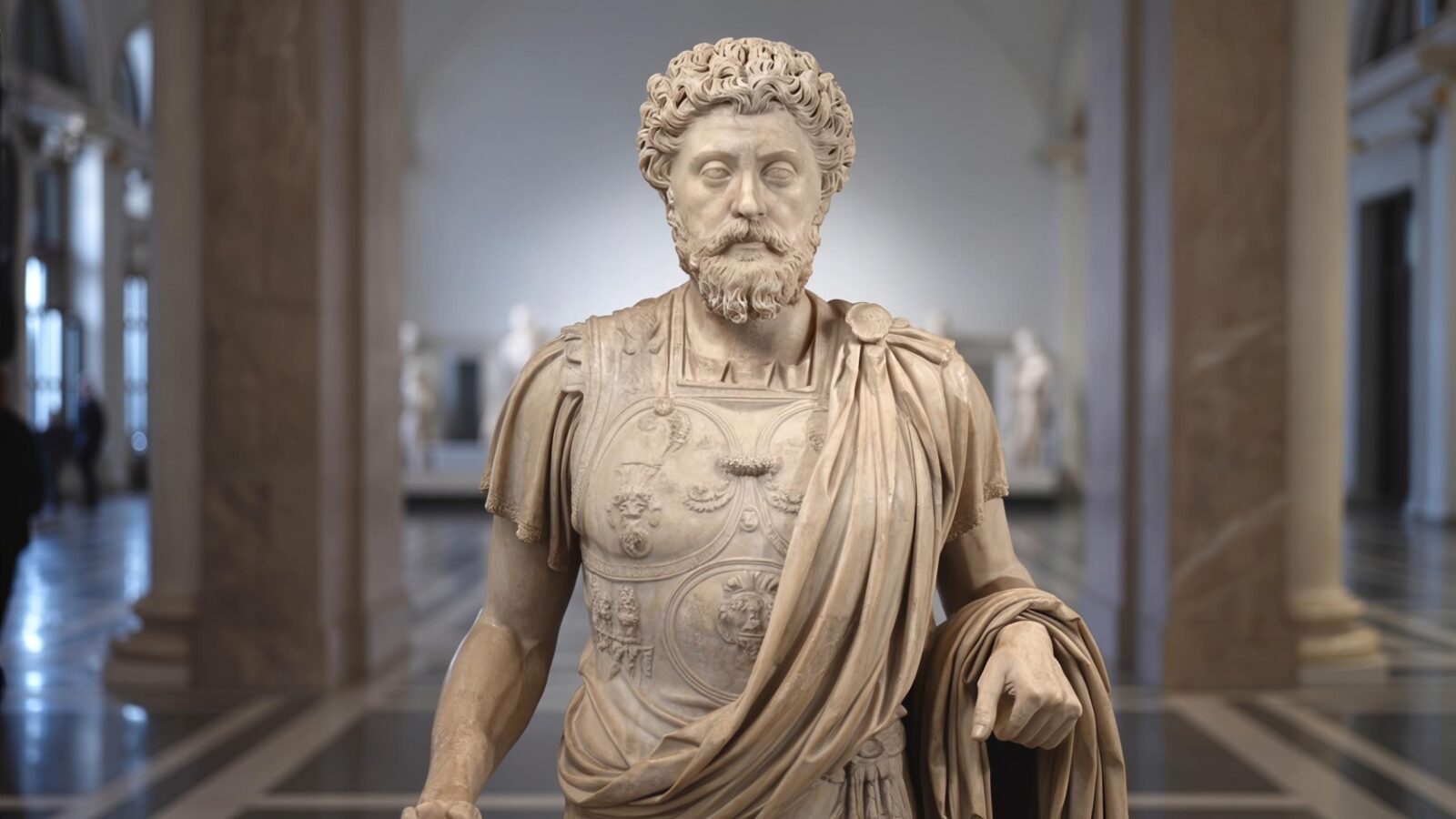
Before Marcus Aurelius faced the demands of Rome, he prepared for the people who might test his patience. His private journal, Meditations, contains this warning: “Begin the morning by saying to thyself, I shall meet with the busybody, the ungrateful, arrogant, deceitful, envious, unsocial. All these things happen to them by reason of their ignorance of what is good and evil.” Marcus Aurelius wrote these words in Book 2 of Meditations.
He did not write this to become cynical or suspicious of everyone around him. He wrote it so that bad behavior would not catch him off guard and pull him into anger. His Stoic approach offers a useful way to deal with difficult people while keeping your judgment, conduct, and peace intact.
1. Handle Meddling People With Firm Limits
“The things which are external to my mind have no relation at all to my mind.” Marcus Aurelius wrote this in Book 7 of Meditations.
Meddling people intrude on decisions, conversations, and private matters that do not concern them. They may pry for information, question choices that are already settled, or offer instructions nobody asked for. Sometimes they mean well, though some people want influence over another person’s life.
You do not need a lengthy defense of your boundaries. A short answer, a change of subject, or a plain statement that the matter is private can be enough. The more you explain to someone who will not respect a limit, the more things you give them to debate.
Marcus Aurelius separated his duties from other people’s opinions. A meddler can offer commentary, yet they can’t take charge of your judgment unless you hand it over. Stay polite if the relationship calls for it, then return your attention to what matters to you.
2. Give Carefully When People Are Ungrateful
“A man, when he has done a good act, does not call out for others to come and see, but he goes on to another act.” Marcus Aurelius wrote this in Book 5 of Meditations.
An ungrateful person can leave you wondering why you bothered. You may offer time, help, or support, only to receive criticism or an expectation that you should provide even more. Appreciation is absent, while entitlement takes its place.
Stoicism asks you to judge your conduct by whether it was right instead of looking for applause afterward. If you helped because the action matched your values, a cold response does not erase the good you did. You have still acted according to your own standards.
That does not require endless giving to someone who treats your help as an obligation. Pay attention to repeated behavior and decide what access to you a person deserves. You can remain generous without becoming a source of unlimited labor, money, or emotional attention.
3. Let Arrogant People Carry Their Own Pride
“Receive wealth or prosperity without arrogance, and be ready to let it go.” Marcus Aurelius wrote this in Book 8 of Meditations.
Arrogant people often try to raise themselves by diminishing those around them. They interrupt, dismiss useful ideas, and make ordinary conversations feel like contests for social or corporate rank. Their behavior can provoke a strong urge to prove yourself.
That urge is where the trouble begins. Once you need an arrogant person to recognize your value, they have gained too much influence over your state of mind. Marcus Aurelius would have you judge yourself by your actions and character rather than by another person’s inflated opinion.
Speak plainly when your position needs to be heard, and let your work stand on its own. You do not have to shrink around a domineering person. You also do not need to join a pointless contest over who is more powerful or important.
4. Deal With Dishonest People Through Facts
“If it is not right, do not do it: if it is not true, do not say it.” Marcus Aurelius wrote this in Book 12 of Meditations.
Dishonest people create confusion because their words and motives do not line up. They may leave out key facts, change a story, or make a promise they have no intention of keeping. Anger is understandable, though anger alone does not protect you from further deception.
Use clarity as your defense. Verify important claims, put agreements in writing when the stakes are high, and pay closer attention to a person’s record than to their explanation. Trust should grow from repeated evidence rather than from pressure or charm.
Another person’s dishonesty does not excuse your own. Keep your side of the conversation accurate, direct, and free of games. If an arrangement depends on confusion, stepping away may be the cleanest choice available.
5. Stay Steady Around Envious People
“What is not good for the swarm, neither is it good for the bee.” Marcus Aurelius wrote this in Book 6 of Meditations.
Envious people see another person’s progress as a threat or an insult. They may downplay success, look for faults, or react coldly when good news arrives. Their resentment often says more about their dissatisfaction with their own life than it says about you.
You do not need to hide every accomplishment to keep someone else comfortable. Marcus Aurelius had little use for vanity, and that is a worthwhile boundary. Share good news without turning it into a display, then continue doing the work that produced the result.
Envy can pull you toward defensiveness, guilt, or pride. None of those reactions improves the situation. Keep your attention on your responsibilities and treat people fairly, even when they cannot offer the same fairness in return.
6. Keep Your Distance From Unsocial People
“The best way of avenging thyself is not to become like the wrong-doer.” Marcus Aurelius wrote this in Meditations.
Unsocial people often withdraw from cooperation and bring a hostile attitude to ordinary interactions. They may snap at others, assume bad motives, or create tension where none is needed. Their ill temper can spread quickly when everyone around them begins answering in the same tone.
You can’t control another person’s temper or force them to act agreeably. You can control whether you add fuel to their hostility. A quiet answer, a pause before speaking, or a decision to end the exchange can keep a brief irritation from becoming a larger conflict.
Calmness does not mean accepting mistreatment. It means setting a limit without becoming cruel yourself. If someone repeatedly creates hostility and refuses cooperation, distance may be wiser than another attempt to win their approval.
Conclusion
Marcus Aurelius expected difficult people because he understood that human beings are often ruled by fear, ego, ignorance, and bad habits. That expectation spared him the shock that turns a minor offense into a ruined day. He could clearly see poor behavior without letting it become his own.
You will still encounter people who overstep, take without thanking you, lie, or harbor resentment toward you. Their choices belong to them. Your response belongs to you, and that is where Stoic calm begins.