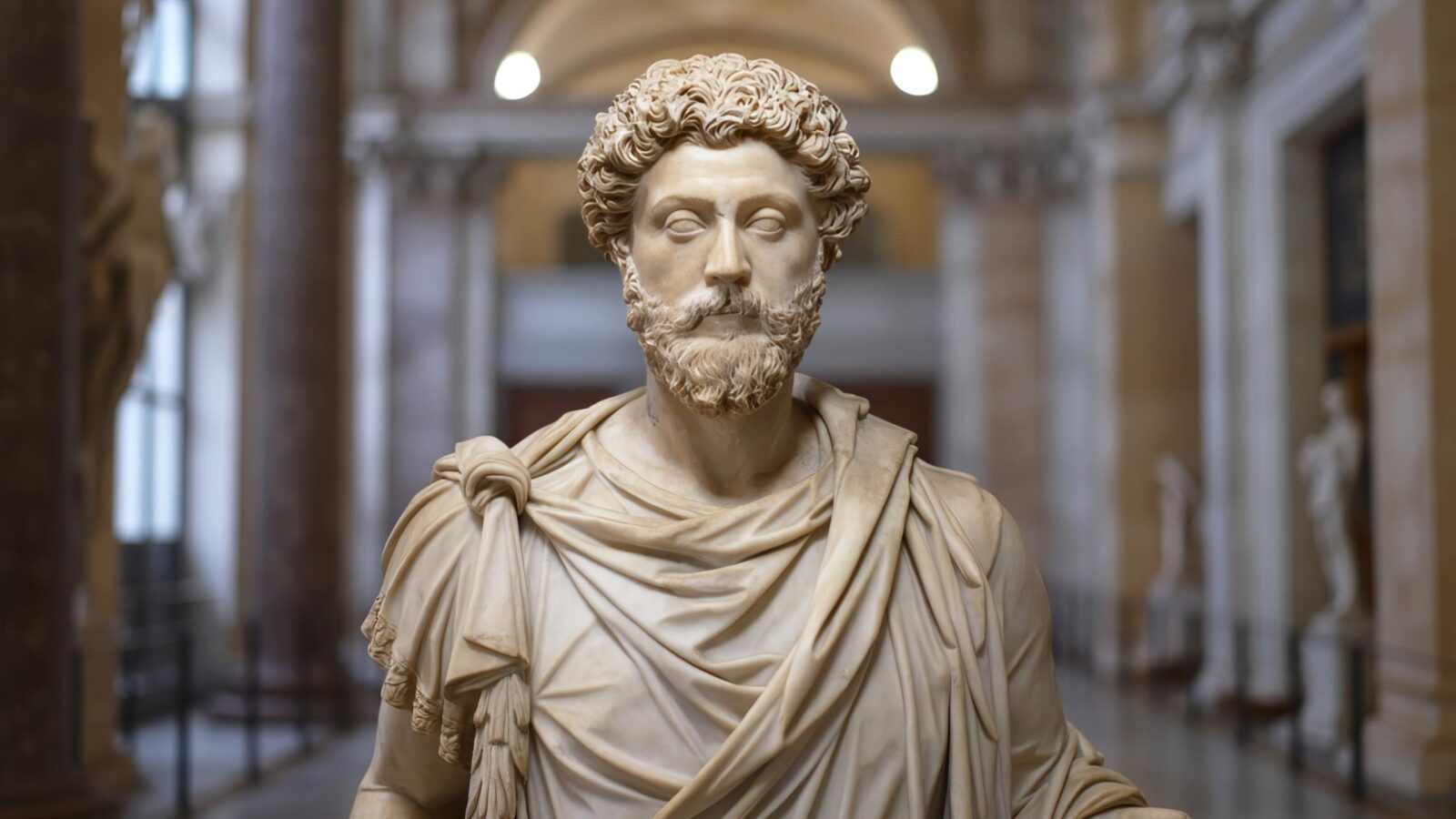
Marcus Aurelius could give orders to an army and still have trouble getting himself out of bed. In his private notes, collected as Meditations, the Roman emperor worked through difficulties familiar to anyone who’s lost his temper or put off a duty. He wanted to be a man others could depend on to be mentally strong, even on a bad day. Five habits from those notes show how he went about it.
1. Take Responsibility for What You Can Control
In Meditations 8.47, Marcus Aurelius asks, “Why do you not rather act than complain?” The question comes at a point where he already knows what he considers right. His frustration has drawn his attention away from an uncomfortable fact. He still has the power to act, and some of what troubles him will persist for as long as he puts off the decision.
The Stoic distinction between what you control and what lies beyond you matters most when you have a great deal at stake. You can weigh the evidence carefully and still reach a conclusion others reject. Their objections deserve a hearing. Their approval is theirs to give. If you make it a condition for acting, anyone willing to withhold it gets a say in what your conscience permits.
The same discipline applies after a mistake. Acknowledge the part you played in the error, correct what you can, and let others judge the correction in their own time. Your responsibility extends to your ability to make amends. It gives you no claim on another person’s forgiveness. All you can do is take responsibility for what you are in charge of doing and apologize for the mistakes you make.
2. Examine Your First Judgment Before You Act on It
“Don’t tell yourself more than you’ve actually seen or heard.” Marcus Aurelius gives himself that instruction in Meditations 8.49. He draws a distinction that’s easy to lose under pressure. Hearing someone speak against you confirms what you’ve been told. It leaves open what was said, whether it was true, and what the speaker meant.
An unexamined judgment can give anger a head start. Once you’ve decided that a disagreement was an act of disloyalty, you begin interpreting everything the other person says as evidence of bad faith. Even an honest explanation can sound like an excuse. By then, you’re asking the evidence to confirm a verdict you’ve already reached.
Describe what happened in terms that someone who disagrees with you could still accept. Then consider what evidence would give you reason to change your mind. You may reach the same conclusion after careful thought. You’ll be able to explain the reason for it, and you’ll know which parts of the matter are still uncertain.
3. Decide in Advance How You’ll Treat Difficult People
Marcus Aurelius opens Meditations 2.1 with a blunt forecast and gives good advice for staying mentally strong. “Each morning, say to yourself, ‘Today I’ll meet people who meddle in other people’s affairs, people who are ungrateful, arrogant, dishonest, envious, or unwilling to cooperate. They act this way because they don’t understand what’s good and what’s bad. I can see the beauty in doing good and the shame in doing wrong. I can also see that a person who does wrong is kin to me. Even when we have no blood ties, we share the power of reason, and each of us has a share in the divine. None of them can harm my character, because no one can make me do anything shameful. I have no grounds for anger or hatred toward someone who shares my nature. We were born to work together, as our feet do, our hands, our eyelids, and our upper and lower teeth. To work against one another goes against our nature. Whenever I resent someone or turn my back on him, I’m working against him too.'”.
Marcus considers what he owes these people, even though he knows how they may behave. He believes human beings have a duty to cooperate, and he includes those who make cooperation difficult in that duty.
There’s a danger in assuming that decent conduct will always be returned. The first time someone takes advantage of your generosity, you can feel entitled to abandon a standard you chose for good reasons. Expecting occasional ingratitude makes it easier to decide how much you’re willing to give and where to draw the line.
You can refuse an unreasonable demand or withdraw your trust from someone who has abused it. Fairness may require a firm answer, especially when someone else will bear the cost of your silence. Decide what the conduct warrants while you can still maintain self-control between forgiving and understanding someone and settling a score.
4. Adapt Your Methods While Holding to Your Principles
In Meditations 5.20, Marcus Aurelius writes that “that which is an obstacle on the road helps us on this road.” He acknowledges that another person can prevent him from carrying out an intended act. What remains open is how he uses his judgment once his preferred course is closed.
A failed plan can be especially hard to reconsider when you’ve defended it in public. Your reputation now feels tied to the decision. You may find yourself arguing for a course of action you would reject if someone put it before you for the first time today. The obstacle has exposed a second difficulty, one you have some power to correct. Pride is beginning to influence what you’re willing to see.
Go back to the reason you chose the plan. If the original purpose still matters, consider which parts of it you can accomplish under the conditions you face now. Sometimes courage means persisting through opposition. Sometimes it means being the first to say that the evidence has changed and that the people who trusted your judgment deserve a different course of action.
5. Let Mortality Clarify What Deserves Your Time
Marcus Aurelius writes, “While you live, while it is in your power, be good.” In Meditations 4.17, he connects the certainty of death with a present duty. A man who assumes he has years to become the person he intends to be can excuse almost any delay.
Ambition makes that delay easy to defend. Another achievement might bring you more influence, and greater influence might let you do some good. The trouble comes when every gain becomes a reason to pursue the next one while the good you meant to do keeps getting postponed. Consider how much of what you hope to accomplish actually requires more success than you have today.
Your calendar gives a fair account of which commitments you honor. If the work you consider most worthwhile gets whatever time is left, it will keep losing out to demands with deadlines and people who insist on an answer. Give that work a definite place in the week, even if doing so costs you an opportunity you would have enjoyed.
Conclusion
Marcus Aurelius urges himself to “resolve to be a good man in every act which you do” in Meditations 7.58. For Marcus, mental strength has a moral purpose. It helps you judge fairly when you’re angry, admit an error when your reputation is at stake, and act on a duty while you still have time.
Other people will influence how your decisions turn out. You remain responsible for the reasons you chose them and for what you do once their consequences become clear.
Marcus Aurelius believed a man stayed mentally strong when he took responsibility for what he could control, questioned his first impressions, and treated people fairly under pressure. When circumstances changed, he adjusted his plans and used the time he had to do what he knew was right.