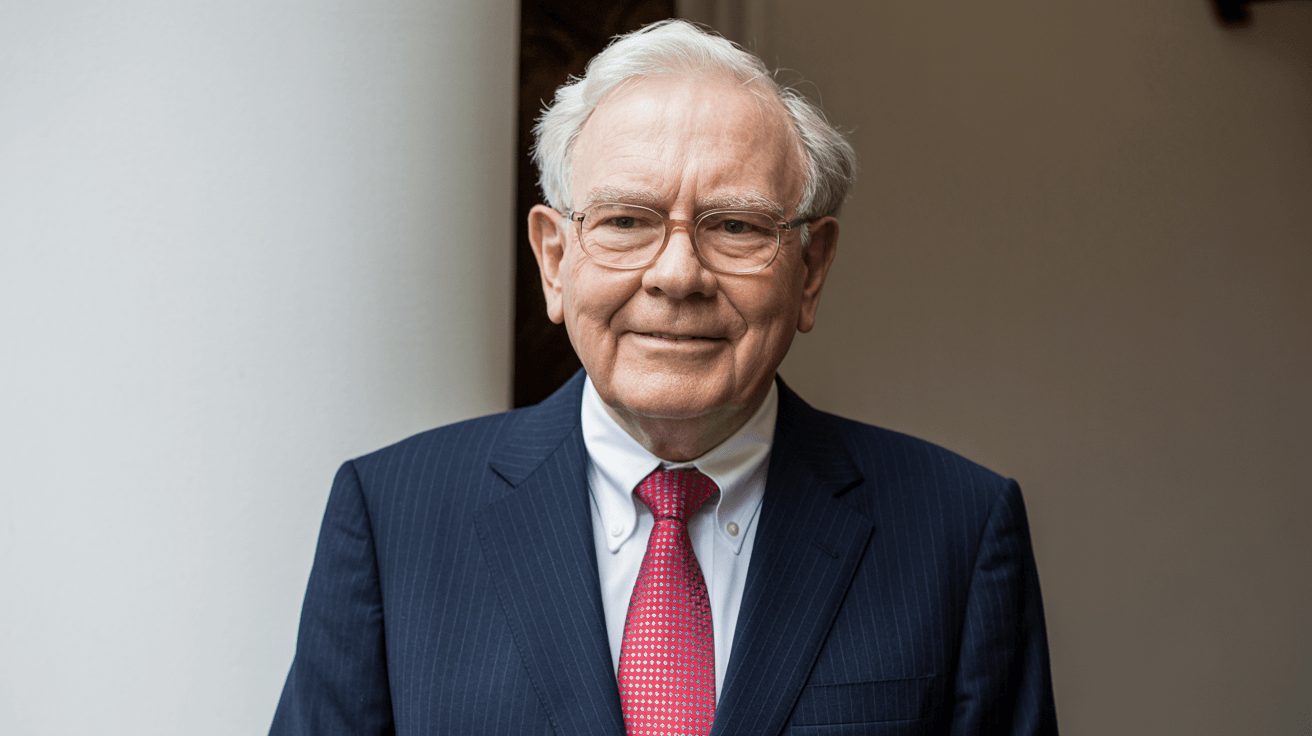
Warren Buffett doesn’t publish listicles online. He writes shareholder letters, takes the stage in Omaha, and answers questions from investors who drove in from across the country. But across decades of those letters and Q&A sessions, a clear roadmap has emerged for anyone paying close attention.
Moving from the middle class to the wealthy isn’t simply about accumulating a larger bank balance. It’s a fundamental shift in how you think about time, risk, and the role of capital in your life. Based on the Oracle of Omaha’s philosophy, here are five signs you’re making that transition.
1. You Focus on Asset Earnings, Not Just a Paycheck
The middle class measures wealth by a monthly salary. The wealthy measure it by the cash their assets generate without requiring their direct labor.
Buffett frequently highlighted “owner earnings” in his letters to Berkshire Hathaway shareholders, describing it as the cash remaining after a business covers its costs and maintains its operations. The shift in thinking is profound.
You stop asking how much you can earn this month and start asking how much cash a given asset will produce over the next two decades. As Buffett has said, “If you don’t find a way to make money while you sleep, you will work until you die.”
This isn’t just a mindset shift. It’s a practical reorientation of every financial decision you make. Every dollar becomes a potential worker, not just a number on a pay stub.
2. Your Circle of Competence Becomes Your Competitive Advantage
Middle-class investors often chase the next big thing. Crypto, AI startups, and hot tips from a colleague at lunch all promise fast returns. Buffett’s philosophy runs in the opposite direction entirely.
The wealthy don’t try to know everything. They go deep on what they actually understand and ignore everything outside that boundary. Buffett has consistently argued that “Risk comes from not knowing what you’re doing.”
The sign you’re moving up isn’t that you’ve found more opportunities. It’s that you’ve become comfortable declining most of them. You can say “I don’t know enough about this” without feeling like you’re leaving money on the table.
Protecting your downside starts to matter more than catching every upswing. That’s a wealthy person’s instinct, not a fearful one. Staying within your circle of competence keeps you safe from your own ignorance. Focus on companies, stocks, sectors, products, and technology you fully understand to create an edge in the market.
3. You Treat Market Volatility as an Opportunity
Most people panic when markets drop. They watch a red screen and feel the urge to sell before things get worse. Buffett has spent a career arguing that this reaction is exactly backward.
He views market downturns as clearance sales. The same asset that traded at a premium yesterday is suddenly available at a discount, and nothing about the underlying business has changed. “Be fearful when others are greedy and greedy when others are fearful,” he wrote in a 2008 New York Times op-ed during the financial crisis.
When your first reaction to a 20% market drop is to pull up a watchlist rather than the exit door, your mindset has shifted. You’ve stopped reacting to price and started searching for value.
That’s not recklessness. It’s the product of doing the homework in advance so that when prices fall, you already know what something is worth.
4. You Start Buying Back Your Time Instead of Status Symbols
Buffett has often remarked that time is the one resource he can’t purchase more of, regardless of his net worth. The middle class tends to respond to rising income by upgrading cars, homes, and wardrobes—the wealthy respond by clearing their calendars.
Buffett and Charlie Munger were both famous for keeping their schedules almost entirely open, preserving large blocks of time for reading and thinking. That wasn’t a luxury. They treated it as the actual work.
The sign you’re transitioning isn’t that you’ve stopped enjoying nice things. It’s that the freedom to say no has become more valuable than any logo or square footage.
When you find yourself valuing an open afternoon more than a new purchase, you’re operating from a wealthy framework. You’ve started measuring life in autonomy rather than acquisitions.
5. You Stop Chasing Multi-Baggers and Start Owning Compounding Machines
Buffett refers to companies like Coca-Cola and American Express as “the inevitables.” These are businesses with competitive moats so deep that their long-term success is close to a certainty, even if no single year is spectacular.
The middle-class approach to investing often seeks the next 10-bagger. The wealthy approach looks for something that will quietly compound at a reliable rate for 20 years without requiring a single dramatic move.
“The stock market is a device for transferring money from the impatient to the patient,” Buffett has said. Patience here isn’t passive. It’s a skill that takes years to develop.
When you stop gambling on fast outcomes and start building positions you’d be comfortable holding through any market cycle, you’ve made one of the most important transitions on this list.
Conclusion
None of these shifts happens overnight. They are the product of reading, experience, and an honest examination of how you’ve been thinking about money. Buffett didn’t develop his philosophy in a single afternoon in Omaha.
The transition from middle class to wealthy isn’t a single event. It’s a series of quiet decisions that compound over time, which, as it turns out, is exactly how Buffett says everything worthwhile gets built.