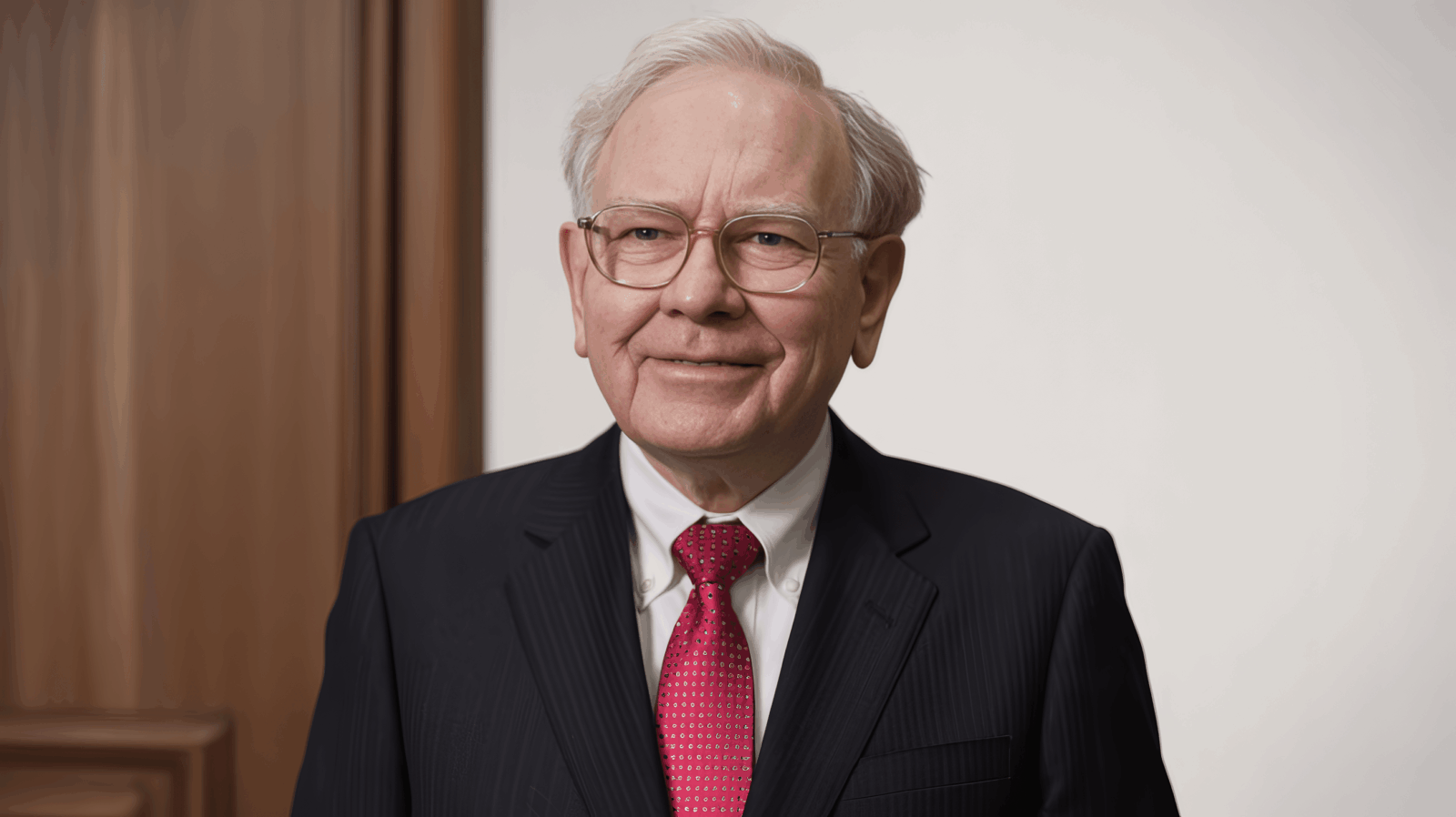
Warren Buffett is celebrated for his financial genius, but his true edge has always been his temperament rather than his raw intellect. He prioritizes a quiet life in Omaha over the chaos of Wall Street, proving that real happiness isn’t about being in the center of all the action and ego gratification.
It’s about knowing what to ignore. Decades of his shareholder letters, interviews, and annual meeting commentary reveal five core pillars of emotional and professional freedom that anyone can apply to their own life, regardless of net worth. Let’s examine Buffett’s principles for a happy life.
1. Use an Inner Scorecard
“The big question about how people behave is whether they’ve got an Inner Scorecard or an Outer Scorecard. It helps if you can be satisfied with an Inner Scorecard.” – Warren Buffett.
Most people live by an outer scorecard, constantly judging their success by how others perceive them, what neighbors think, or what they post on their social media each week. Buffett advocates for the exact opposite approach and has built his entire career and personal life on internal standards alone.
He often poses a memorable thought experiment about reputation versus reality. “Would you rather be the world’s greatest lover, but have everyone think you’re the world’s worst lover? Or would you rather be the world’s worst lover but have everyone think you’re the world’s greatest lover?” Buffett asked.
Your honest answer reveals whether you live by internal or external standards. If you are genuinely happy with your own actions and your integrity stays intact at the end of each day, the shifting opinions of the crowd shouldn’t move the needle on your peace of mind.
2. Master Your Circle of Competence
“You only have to be able to evaluate companies within your circle of competence. The size of that circle is not very important; knowing its boundaries, however, is vital.” – Warren Buffett.
Buffett doesn’t try to be the smartest person in every room he enters, whether at business meetings or social events. He only cares about being the smartest person in his business and the investment decisions he deliberately makes, and he draws a disciplined boundary around that territory.
He ignores the vast majority of investment opportunities each year because they fall outside what he genuinely understands at a deep level. This same powerful principle applies far beyond Wall Street and translates directly into everyday decision-making for ordinary people.
Stop feeling pressured to have a strong opinion on every news cycle, every passing trend, or every new technology that emerges this month. Caring deeply about a few things you actually understand is far more productive than caring shallowly about everything that scrolls past your screen.
3. Practice Selective Apathy Toward Criticism
Buffett has often stressed that emotional discipline matters far more than raw intelligence in any serious pursuit. “The most important quality for an investor is temperament, not intellect.” – Warren Buffett.
In the early decades of Berkshire Hathaway, financial critics called Buffett’s methods stuffy or hopelessly outdated for the modern era. During the late 1990s technology bubble, prominent voices declared that he had lost his touch and didn’t understand the new economy unfolding around him.
He didn’t care about the noise, and history eventually vindicated his patient approach dramatically. If your underlying logic is sound and your numbers add up, the facts don’t change just because a crowd of people disagrees with you loudly in the moment.
Develop a thicker skin by focusing on the process rather than the applause or the booing from the cheap seats. If the math works and the logic holds together under stress, the surrounding noise can’t dictate your eventual outcome unless you choose to let it inside your head.
4. Embrace the Power of No
Buffett summarized this discipline in characteristically blunt fashion during one of his many talks to students. “The difference between successful people and really successful people is that really successful people say no to almost everything.” – Warren Buffett.
Buffett’s longtime business partner, Charlie Munger, often described Warren as a “no-machine” in his daily decision-making. Most opportunities, even attractive ones presented by impressive people, receive a quick and polite rejection rather than a hesitant maybe.
This discipline protects both his calendar and his peace of mind from the constant erosion that fills the average professional life. To be happy and remain effective over decades, you must stop caring so much about missing out on every interesting possibility that crosses your desk.
By saying no to social obligations, side projects, and professional commitments that don’t truly energize you, you save your yes for what actually matters most. The hidden cost of saying yes to the wrong thing is the inability to say yes to the right thing when it eventually arrives.
5. Define Success by Love, Not Net Worth
Buffett has shared his personal metric for a successful life with countless audiences over the decades. “When you get to my age, you’ll really measure your success in life by how many of the people you want to have love you actually do love you.” – Warren Buffett.
Despite his billions and decades of unmatched business achievement, Buffett’s measurement of success is surprisingly humble. He has shared this same standard many times in his talks to business school students and in interviews with journalists.
He has noted that he knows people who have plenty of money and receive testimonial dinners held in their honor, yet nobody actually loves them quietly at home. That outcome, in his honest view, represents a failed life regardless of how impressive the financial scoreboard appears.
Stop caring so deeply about status symbols and the fleeting approval of strangers you’ll never see again. Wealth is a genuinely useful tool that opens real doors, but it can’t buy the one thing that actually dictates long-term happiness across decades.
Conclusion
The art of not caring isn’t about apathy, cynicism, or disengagement from the world around you. It’s about being deeply selective regarding what you allow to occupy your attention, your time, and your finite emotional energy each day.
Buffett’s quiet life in Omaha is the visible result of decades spent saying no to noise, criticism, status games, and opinions that don’t serve his actual long-term goals. You don’t need billions in the bank to apply this same selective filter to your own daily life right now.
You only need the willingness to define success on your own terms and let the rest fall away naturally. Once you stop caring about what doesn’t matter, you finally have the bandwidth to care fully about what actually does.