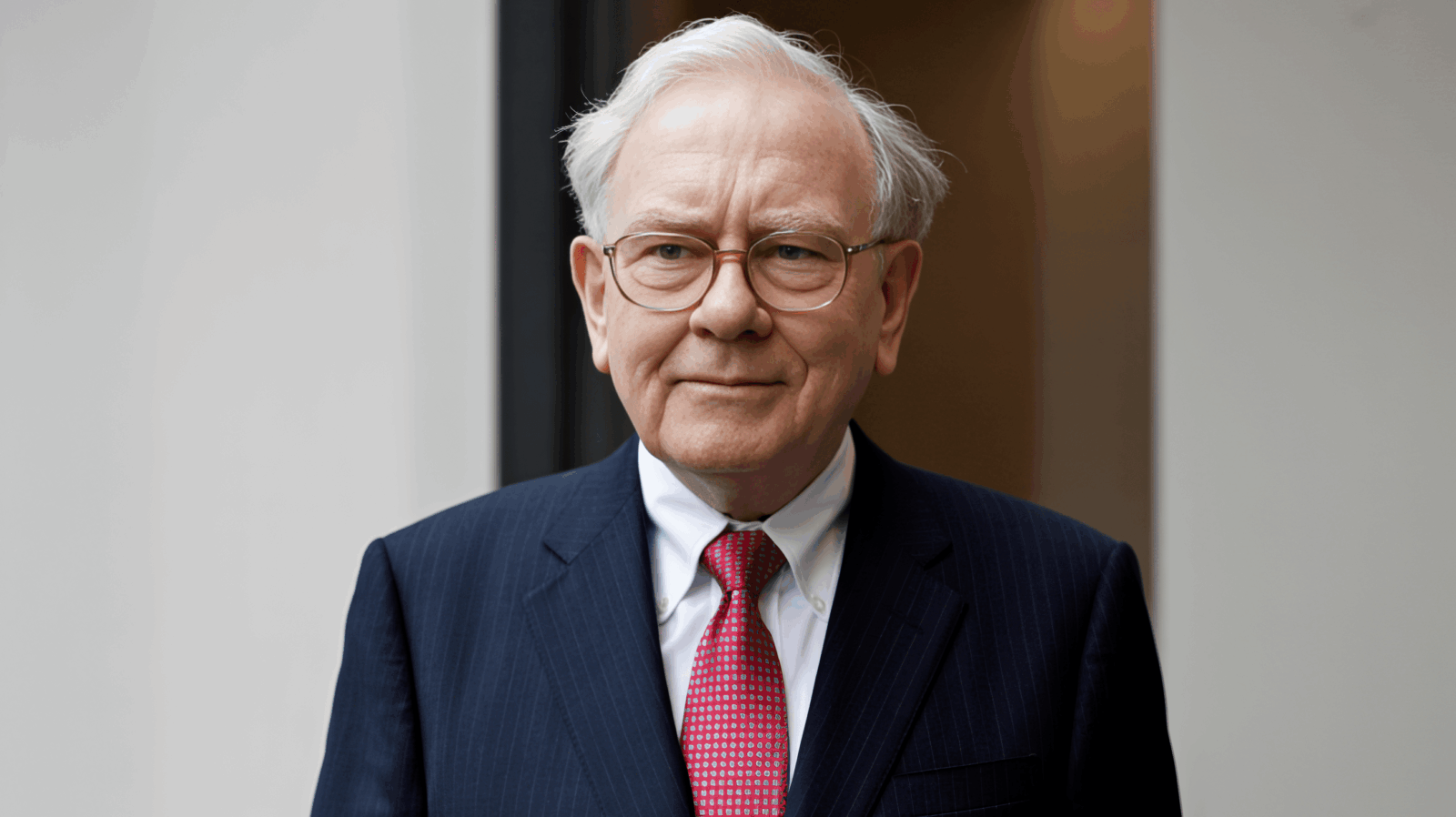
Warren Buffett didn’t build a multi-billion-dollar empire through high-speed trading or complex financial algorithms. He treated his mind like a compound-interest account, relying on rigorous discipline that prioritized long-term clarity over short-term noise.
The “Oracle of Omaha” didn’t stumble into his wealth by accident. He built it systematically, one deliberate mental habit at a time, over the course of six decades. Let’s look at how Warren Buffett trained his mind for wealth using discipline.
1. The Discipline of Saying No
Buffett’s greatest mental strength is his willingness to refuse almost everything that doesn’t meet his criteria. He keeps a largely empty calendar, believing that time is the one resource that even a billionaire can’t buy more of.
He operates within what he calls a “Circle of Competence.” If a business or technology falls outside what he understands deeply, he ignores it entirely, regardless of the hype or pressure surrounding it.
“The difference between successful people and really successful people is that really successful people say no to almost everything.” — Warren Buffett.
This habit isn’t about being dismissive of new ideas. It reflects a trained mind that has learned, through long experience, that saying yes to the wrong thing is far more dangerous than saying no to everything.
Most investors feel compelled to chase every stock promising a strong uptrend. Buffett built his fortune by resisting that impulse with near-total consistency, year after year.
2. The Daily Reading Habit
While most investors monitor flickering stock tickers throughout the trading day, Buffett spends the majority of his working hours reading. He views knowledge as something that compounds over time, much like interest in a well-managed investment.
Early in his career, Buffett was known to work through hundreds of pages of financial reports, annual filings, and industry newspapers in a single day. That foundational habit has never left him, even as his wealth grew.
“Read 500 pages like this every day. That’s how knowledge works. It builds up, like compound interest. All of you can do it, but I guarantee not many of you will do it.” — Warren Buffett.
This daily discipline forces the mind to synthesize facts rather than react to opinions and headlines. By the time he makes an investment decision, it isn’t a gamble. It is the logical conclusion of years of accumulated information.
Reading at that volume also trains patience and careful thinking. The mind learns to wait for genuine understanding rather than act on incomplete or emotionally charged information, and that alone separates Buffett from the vast majority of market participants.
3. Emotional Detachment and the Inner Scorecard
Buffett trained his mind to ignore the daily mood swings of the market, which he once learned from his mentor Benjamin Graham to personify as “Mr. Market,” a fictional figure prone to irrational highs and lows. He focuses instead on a business’s fundamental value.
His investing strategy relies on what he calls an “Inner Scorecard,” judging his own decisions by internal standards rather than public approval or criticism.
This emotional discipline is arguably the rarest skill in the investing world. Most people make financial decisions based on how those decisions will appear to others, rather than on whether the underlying logic is sound.
“The most important quality for an investor is temperament, not intellect.” — Warren Buffett.
Buffett has long argued that temperament matters more than raw intelligence in wealth building. The investor who can remain calm during a market panic and exercise caution during periods of market euphoria holds a structural advantage over the majority of participants who are reacting emotionally.
That kind of emotional steadiness doesn’t come naturally to most people. It is built over years of deliberate mental practice, reinforced by a strong, well-defined internal value system.
4. Radical Frugality as a Mental Filter
Buffett has lived in the same Omaha home he purchased in 1958 for $31,500. He keeps his personal life deliberately simple, not out of financial necessity, but as a calculated form of mental discipline.
By maintaining a modest lifestyle, he avoids what behavioral researchers call decision fatigue. Every unnecessary personal choice drains mental energy that could be directed elsewhere. By eliminating those choices at home, Buffett preserves his full cognitive capacity for high-stakes business and investment decisions.
“Do not save what is left after spending, but spend what is left after saving.” — Warren Buffett.
His frugality also insulated him early in his life from lifestyle creep, the gradual inflation of personal expenses that forces many investors to take on unnecessary risks to maintain a certain standard of living. When you aren’t chasing status symbols, you can think with far greater clarity.
This is a form of financial discipline that runs much deeper than budgeting habits. It is about protecting the mind from ego-driven decision-making, which has ended more investment careers than any bear market ever has.
5. Waiting for the Fat Pitch
Buffett has long drawn inspiration from baseball legend Ted Williams, who studied the strike zone so carefully that he would only swing at pitches in his personal sweet spot. Buffett applies the same logic to investing. He has the discipline to do nothing for extended periods if the right opportunity isn’t available.
Most investors feel psychological pressure to act when they are holding cash. The idea of sitting on the sidelines feels uncomfortable, even reckless, to most people. Buffett’s mind has been trained to find genuine comfort in patient inactivity.
“The stock market is a no-called-strike game. You don’t have to swing at everything — you can wait for your pitch.” — Warren Buffett.
There is no penalty for missing opportunities. You can observe hundreds of potential investments without committing to any of them, suffering no negative consequence, until the truly exceptional opportunity arrives.
That patience is not passive or lazy. It is an active and demanding discipline that requires consistent emotional control and deep intellectual confidence in the face of constant external pressure to act.
Conclusion
Warren Buffett’s wealth was not built solely on raw intelligence. It was built on a set of disciplined mental habits developed and refined over decades of intentional practice.
He said no to nearly everything that didn’t meet his standards, read extensively every day, judged himself by an inner standard rather than popular opinion, kept his lifestyle simple to protect the quality of his thinking, and waited with extraordinary patience for the right opportunities to emerge.
The compounding effect of those mental disciplines over six decades of investing produced results that can look like magic from the outside. From the inside, they were the product of a mind trained with exceptional intentionality and consistency.
The lesson isn’t that you need to replicate Buffett’s life exactly. It is that the mental disciplines behind his success are available to anyone willing to practice them seriously and persistently.