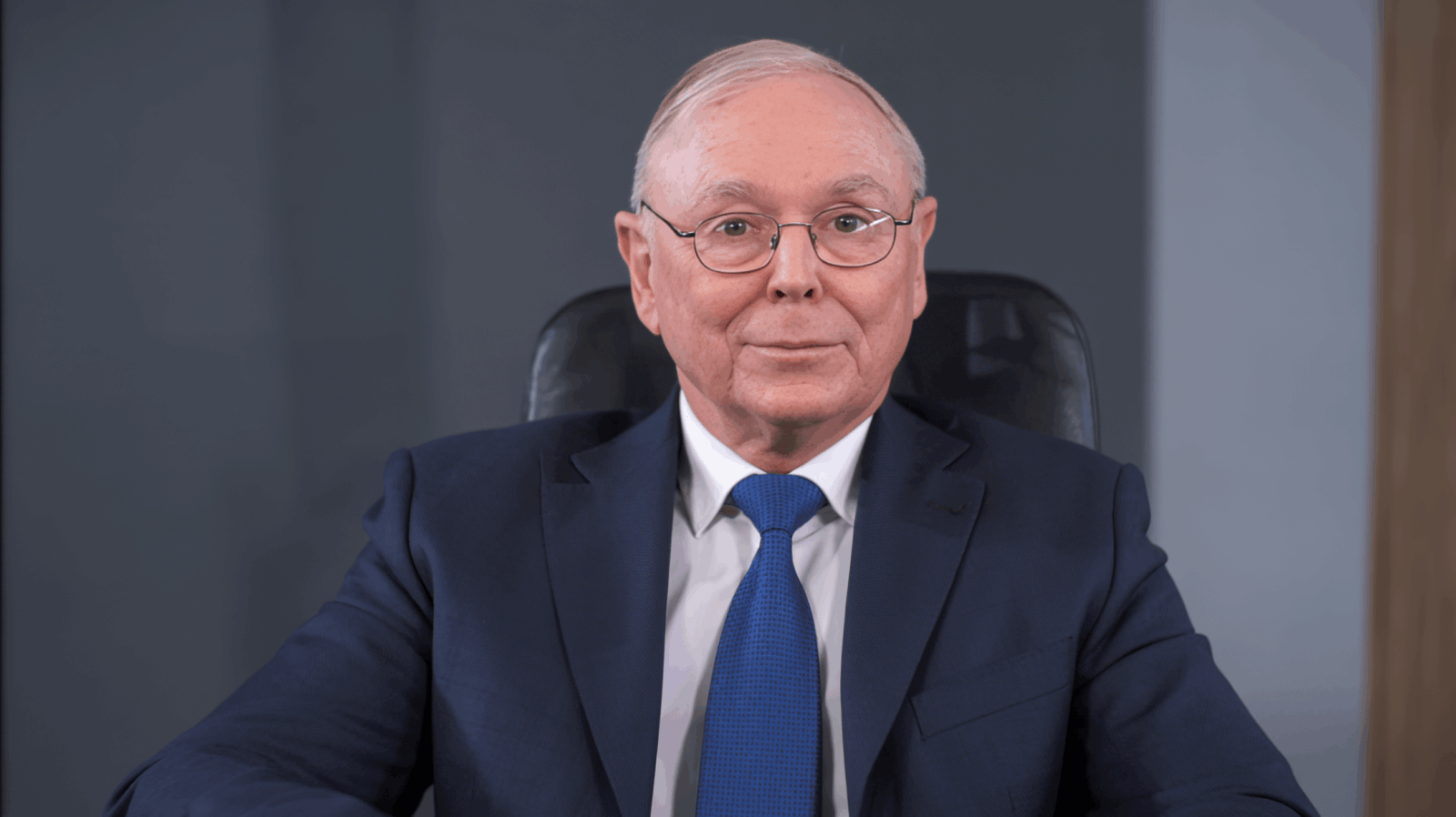
Charlie Munger spent decades building one of the most formidable fortunes in American history alongside Warren Buffett at Berkshire Hathaway. His approach to wealth was rooted in simplicity, patience, and a clear-eyed understanding of what actually produces lasting value.
While most people associate Munger with stock picking, his philosophy extended well beyond the stock market into several specific asset classes he either owned personally or endorsed publicly. He identified assets that generate real, compounding wealth over time, and he was equally clear about what to avoid. Understanding both sides of his thinking is essential to applying his lessons.
1. High-Quality Real Estate
Specifically, he liked high-quality apartments and land with “lush landscaping.” He famously said, “Spend money on trees, and you get it back triple,” referring to how aesthetic value creates a permanent competitive advantage in property.
Before Munger became a Wall Street legend, he built his early wealth through real estate development. He partnered with Otis Booth to build apartment buildings in California, applying the same disciplined thinking to real estate that he would later bring to equities.
Munger believed in focusing on quality locations and high-grade construction. He understood that well-placed, well-maintained real estate creates a durable competitive advantage, generating reliable rental income while appreciating over decades.
His preference was for assets with genuine aesthetic and practical appeal. Well-maintained, quality properties in desirable areas attract better tenants, command higher rents, and hold their value through economic downturns, which is exactly the kind of durable edge Munger sought in every investment he made.
2. Family Farms and Agricultural Land
In the 2023 Berkshire Hathaway shareholder letter, Buffett noted that Munger’s investment temperament was similar to that of someone who saves to buy a farm or a rental property.
The Logic: A farm is a productive asset that yields crops (cash flow) regardless of what the stock market is doing. It represents a “primary” asset that provides essential goods for civilization.
Munger viewed a productive farm the same way he viewed a great business: as an asset that generates reliable cash flow year after year, regardless of what markets are doing.
A family farm produces tangible goods that civilization depends on. It isn’t priced by the hour on a stock exchange, which means its owner is largely insulated from the emotional panic that drives most investors to sell at exactly the wrong time.
Munger appreciated that farmland combines two of his most prized qualities in any asset: it generates cash flow from crop yields and appreciates over long time horizons. It is a patient investor’s asset in the purest sense.
Warren Buffett’s purchase of a farm at the age of 14 is often cited by both him and Charlie Munger as the ultimate example of “The Investor Game” vs. “The Speculator Game.”
Here are the specific details of that asset and why it matters in the context of Munger’s philosophy:
The Stats
- The Age: 14 (1944).
- The Price: $1,200.
- The Asset: A 40-acre farm in Nebraska.
- The Source of Funds: Money Buffett saved from delivering newspapers (The Washington Post) and selling Coca-Cola bottles and magazines door-to-door.
Why Munger and Buffett “Love” This Farm Story
In Poor Charlie’s Almanack and Berkshire shareholder letters, this farm is used to illustrate three specific mental models for getting rich:
The “Hands-Off” Income Stream Buffett did not know how to farm, and he didn’t intend to learn. He immediately hired a tenant farmer to work the land. They agreed on a profit-sharing arrangement: the tenant did the work, and Buffett received a portion of the crops.
-
Munger’s Take: This is a “capital-light” asset. Buffett didn’t need to buy the tractors or seeds; he provided the capital (the land) and let a specialist provide the labor.
Ignoring the “market,” Buffett famously noted that after he bought the farm, he didn’t check the “price” of farmland every day. He didn’t care if the neighbor thought the farm was worth $1,100 or $1,300 the next week.
-
The Lesson: He focused on the asset’s productivity (how many bushels of corn/soybeans it produced) rather than its daily market price. If the farm produced 10% more corn, he was 10% richer, regardless of what the “market” said.
The Power of Early Accumulation Munger often highlighted that Buffett was already a “compounding machine” before he could drive. By the time Buffett finished college, he had accumulated $9,800 (roughly $112,000 in today’s money), largely because he started buying productive assets like this farm while his peers were spending their money on “stuff.”
Buffett still owns a farm today (though a different one bought in 1986). He uses it as a benchmark: If an asset can’t produce a yield without you being there to “stare at the corn,” it isn’t an asset that will make you truly rich. “I’ve never visited the farm. It doesn’t grow because I stare at it.” — Warren Buffett (paraphrased by Munger)
3. Human Capital and the Latticework of Mental Models As An Asset
“You’ve got to have models in your head. And you’ve got to array your experience — both vicarious and direct — on this latticework of models.” — Charlie Munger.
Munger argued repeatedly that the most valuable asset a person can build is a multidisciplinary education. He called it a “latticework of mental models,” drawing the best ideas from physics, biology, psychology, economics, and history and organizing them into a unified framework for decision-making.
This asset never depreciates. It can’t be taxed, confiscated, lose value in a market crash, or become irrelevant to a single competitor. Munger believed that someone who has genuinely mastered this latticework is capable of spotting the convergence of multiple forces that create rare and massive opportunities others consistently miss.
Most people invest their money without ever investing in their own minds. Munger insisted that building genuine wisdom first provides the foundation that makes every other investment decision more sound, and the returns on that wisdom compound quietly over an entire career.
4. Cash Equivalents and Strategic Dry Powder
The Utility: He treated cash as a “deferred investment” or a “call option on opportunity.” To Munger, cash wasn’t for spending; it was for having the “dry powder” to act with massive conviction when a once-in-a-decade deal appeared.
Munger had a complicated but deliberate relationship with cash. He disliked holding it for extended periods because inflation steadily erodes its purchasing power. At the same time, he recognized that maintaining a cash reserve, including U.S. Treasury Bills, was essential to acting decisively when rare opportunities arose.
He treated cash not as idle money but as an asset, like a call option on a future opportunity. The investor who is always fully deployed has no capacity to act when a once-in-a-decade market dislocation arrives. Munger and Buffett built their reputations in part by having the discipline to hold dry powder while others scrambled for yield.
The patience required to maintain cash reserves without deploying them prematurely is genuinely difficult. Munger viewed that difficulty as a competitive moat. Most investors can’t sit on cash while markets are rising, which is precisely why those who can will eventually find themselves positioned to buy exceptional assets at exceptional prices. Cash is the ultimate asset, as it can be deployed to capture opportunities as they arise.
5. Partnership Interests in Exceptional Managers
Charlie Munger believed that if you find a “genius” manager with high integrity who is operating in a fertile market (like China was 20 years ago), the partnership itself becomes a premier asset class.
Munger made a significant exception to his “stick to what you know” philosophy when he invested heavily in Li Lu’s Himalaya Capital fund. Li Lu focused primarily on Asian equities, a market that sat outside Munger’s typical circle of competence. Yet Munger recognized Li Lu as a manager of rare ability and uncompromising integrity working in a highly fertile investment environment.
Munger believed that when you identify a genuinely exceptional manager with aligned incentives, a partnership interest in that fund becomes a premier asset class in its own right. The logic mirrors his approach to equities: find the best operator in a growing field, pay a fair price, and hold without second-guessing the manager’s day-to-day decisions.
Most investors never find a manager of Li Lu’s caliber. Munger’s lesson, however, is that the search itself is worth conducting. A single exceptional partnership with the right person at the right time can produce the kind of wealth that decades of average investing can’t match.
6. Wonderful Businesses at a Fair Price
“A great business at a fair price is superior to a fair business at a great price.” — Charlie Munger
Munger’s favorite asset class, above all others, was an ownership stake in a truly exceptional business. He spent decades pushing Warren Buffett away from the “cigar butt” style of buying cheap, mediocre companies and toward paying a fair price for businesses with durable competitive advantages that could compound wealth for decades without requiring constant intervention.
His template was See’s Candies, acquired by Berkshire Hathaway in 1972. It requires little capital reinvestment, carries enormous brand loyalty, and has the pricing power to raise prices year after year without losing customers. Munger recognized it as a model of what a great business actually looks like in practice.
He favored companies with high returns on capital, honest management, and a product or service that customers genuinely couldn’t get elsewhere at the same quality. These businesses don’t need the economy to cooperate. They generate cash through recessions, inflation, and market crashes alike.
Munger also believed in concentration over diversification. When you find a business of rare quality run by people of rare integrity, he argued, the intelligent move is to hold a meaningful position and resist the urge to sell simply because the price has risen. The compounding that follows patient ownership of a truly great business, in his view, is where most serious fortunes are ultimately made. These businesses can be ones you found and operate, publicly traded stocks you buy, private equity investments, or whole businesses you acquire.
Conclusion
Charlie Munger’s approach to building enduring wealth was never about chasing trends or finding shortcuts. He focused on a small number of assets that generate real value over the long term: quality real estate, productive farmland, an educated mind, strategic cash reserves, and stakes in exceptional managers.
He was equally clear about what he rejected. Gold, in his view, was unproductive. Cryptocurrency, he considered, was speculative and contrary to the interests of civilization. Munger’s framework is a direct challenge to the noise of modern finance and a reminder that lasting wealth is built not by moving fast, but by thinking clearly and holding with extraordinary patience.