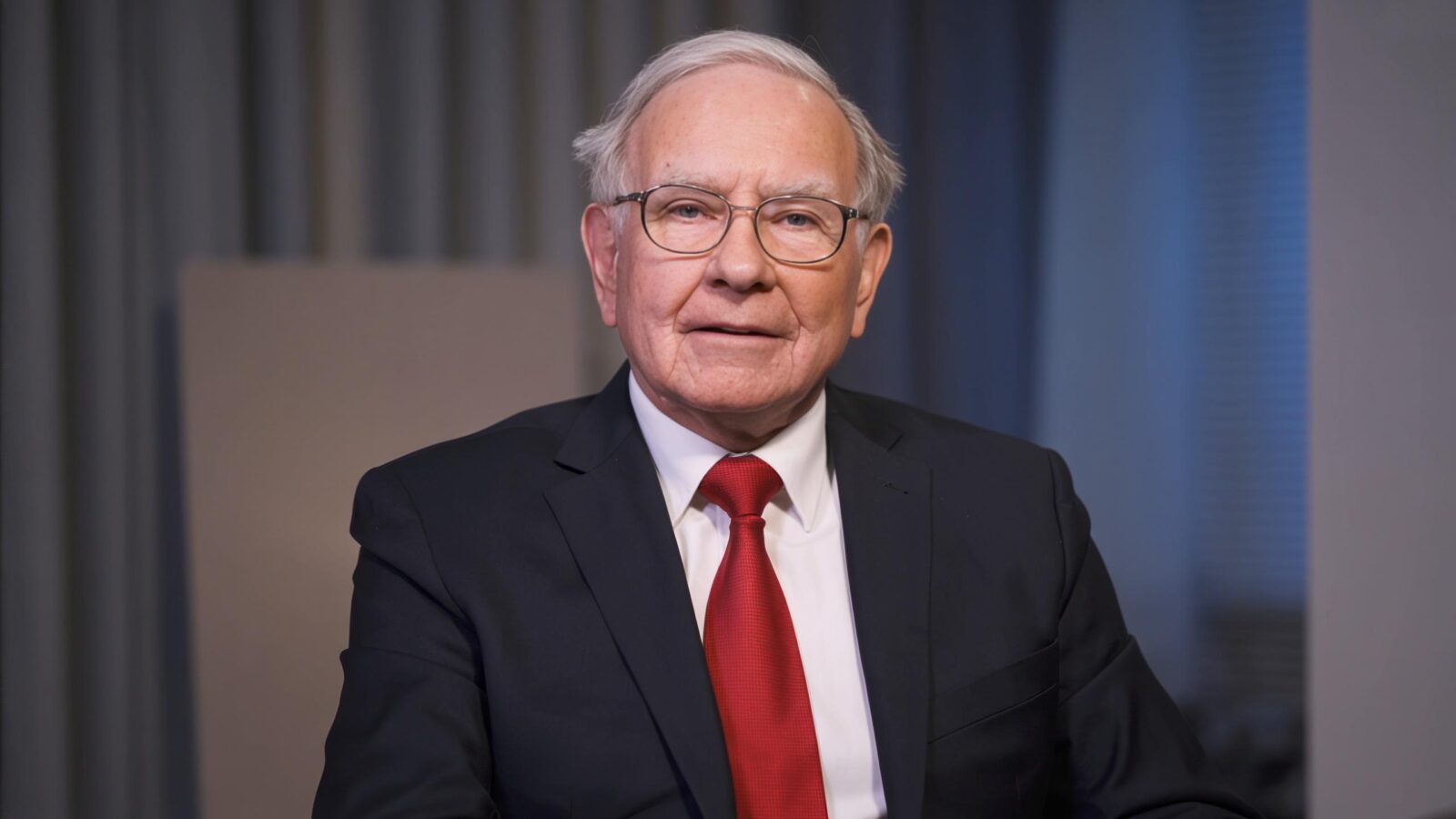
Warren Buffett never got an MBA, and he never needed one. He built one of the largest fortunes in history using plain arithmetic, an even temperament, and a habit of ignoring most of what business schools consider gospel.
The ten lessons below come from his shareholder letters and interviews over several decades, and each one cuts against something taught in a standard MBA classroom.
1. Beta and Volatility Are Not Risk
“Risk comes from not knowing what you are doing.” – Warren Buffett.
Modern portfolio theory treats price swings as the definition of risk. A stock that jumps around gets labeled dangerous, and professors build entire courses around measuring that jumpiness with beta. Buffett has spent his career arguing that this is backward.
A wonderful business does not become a bad one because its stock price fell 30% during a bad quarter or a market panic. The company’s earnings power, customer loyalty, and competitive position are what matter. Price is just what other people are willing to pay on a given day, and Buffett treats a falling price on a strong business as an invitation rather than a warning.
2. Inaction Is Often Superior to Action
“The stock market is a no-called-strike game. You don’t have to swing at everything. You can wait for your pitch.” – Warren Buffett.
Executives are trained to look busy. Launch the initiative. Run the analysis. Restructure the team. Buffett does almost none of this. He reads for hours most days, yes, and he can go years without a major purchase.
There is no penalty for the pitches an investor lets go by. The only penalty comes from swinging at something bad and missing. That single distinction, patience over activity, separates Buffett from nearly every fund manager racing to justify their fees with constant trading and new ideas.
3. High IQ and Complex Math Do Not Guarantee Success
“Investing is not a game where the guy with a 160 IQ beats the guy with a 130 IQ.” – Warren Buffett.
Wall Street rewards complexity. Black-Scholes models, multi-variable discounted cash flow spreadsheets, and dense statistical arbitrage strategies fill finance textbooks. Buffett has said plainly that none of this correlates with investing success once a person clears a fairly low bar of basic intelligence.
Temperament decides outcomes far more than horsepower. If a deal only looks attractive after running it through an elaborate formula, that complexity is usually hiding a weak idea underneath. Buffett is famous for doing arithmetic that a fifth grader could follow, and if a business’s advantage is not obvious at that level, he walks away.
4. Extreme Decentralization Beats Micromanagement
“We delegate almost to the point of abdication.” – Warren Buffett.
Corporate strategy courses emphasize tight oversight, constant metrics, and cross-departmental coordination. Berkshire Hathaway runs on the opposite principle. A headquarters staff of a few dozen people oversees a collection of businesses employing hundreds of thousands.
Buffett hires managers he trusts and then gets out of their way. He treats the hiring decision as the real work and the follow-up supervision as something to minimize rather than maximize. Most executives can’t resist checking in constantly, and Buffett built an entire company culture around resisting that urge.
5. The Circle of Competence Beats Hyper-Diversification
“You only have to be able to evaluate companies within your circle of competence. The size of that circle is not very important; knowing its boundaries, however, is vital.” – Warren Buffett.
Academic training often implies that a sufficiently sharp analyst can evaluate any industry with enough data. Buffett rejects this and stays inside a narrow set of businesses he genuinely understands.
Saying “I don’t know” has been one of his most useful habits. It kept him out of the dot-com bubble in the late 1990s and out of plenty of speculative crazes since. A small circle drawn honestly beats a wide circle drawn out of overconfidence.
6. Capital Allocation Is an Executive’s Top Job
“Good jockeys will do well on good horses, but not on broken-down nags.” – Warren Buffett.
Most CEOs rise through sales, engineering, or operations. A few of them arrive at the top job with real experience deciding how to use the cash their company generates each year. Buffett has pointed to this gap repeatedly as one of the most overlooked weaknesses in corporate leadership.
A talented manager placed in a mediocre business will still struggle, no matter how sharp that manager is. The quality of the underlying business sets the ceiling, and Buffett’s point about jockeys and horses gets at exactly this.
7. Culture and Integrity Over Contracts
“In looking for people to hire, you look for three qualities: integrity, intelligence, and energy. And if they don’t have the first, the other two will kill you.” – Warren Buffett.
Negotiation courses focus on airtight contracts, earn-out clauses, and legal protections stacked a hundred pages deep. Buffett built his reputation doing the opposite. He trusts character first and lets the paperwork stay simple.
A dishonest partner can find a way around almost any contract. Buffett treats integrity as the filter that comes before intelligence or energy even enters the conversation, because the other two qualities become liabilities in the hands of someone who can’t be trusted.
8. Ignore Macroeconomic Forecasting
“We have long felt that the only value of stock forecasters is to make fortune tellers look good.” – Warren Buffett.
Finance programs spend significant time on interest rate predictions, GDP models, and inflation forecasts. Buffett and his late partner, Charlie Munger, built Berkshire for decades without leaning on any of it to make decisions.
Guessing where the economy heads next is mostly a distraction dressed up as insight. Buffett focuses instead on individual businesses sturdy enough to survive whatever conditions show up, a durability he cares about far more than any macro prediction.
9. Pricing Power Is the Ultimate Business Model Moat Metric
“The single most important decision in evaluating a business is pricing power.” – Warren Buffett.
Business strategy frameworks lean heavily on market share, scale, sales, and competitive positioning as the measures that matter most. Buffett asks a simpler question. Can this company raise its prices without losing customers to a competitor down the street?
A business that needs weeks of internal debate to raise prices by even a small amount is usually weak. A business that can raise prices with barely a shrug from its customers is showing the kind of durable advantage Buffett has spent his career hunting for.
10. Accounting Rules Often Obscure Economic Reality
“Earnings can be as pliable as putty when a charlatan heads the company reporting them.” – Warren Buffett.
Standard accounting rules get taught as the final word on a company’s profitability. Buffett has long argued that reported earnings can bend more than most investors realize. Depreciation schedules and non-cash charges can distort what a business is truly generating in cash terms.
He built the concept of owner earnings specifically to cut through that fog. It starts with reported income, adds back the non-cash charges, and subtracts the real capital spending a business needs to defend its position. The result is closer to the truth than the number printed at the top of an earnings report.
Conclusion
None of these ten lessons requires a finance degree to put into practice. What they ask for instead is patience, honesty about what you actually understand, and the discipline to sit on your hands when there is nothing worth doing.
Buffett built his fortune by walking past most of what a traditional finance education teaches and leaning instead on temperament, business quality, and plain common sense. For an everyday investor working from a laptop rather than a trading floor, that combination still beats any spreadsheet full of formulas.