Walk down the wellness aisle of any large store, and you’ll find many products promising to help you stay calm. Most of them deliver atmosphere. A candle with a soothing word on the label does nothing measurable to your nervous system, and the same goes for most of what gets sold as stress relief.
A few purchases work differently. They act on systems you can actually measure, such as sleep architecture, circadian timing, and sensory load, and the research behind them exists outside the marketing sales copy. Five of them earn their price, though the evidence is far stronger for some than for others. Here are 5 purchases that can actually reduce your stress, according to science.
1. Weighted Blankets
A weighted blanket applies broad, even pressure across the whole body. Occupational therapists have used firm pressure for decades with clients who get overstimulated easily, and the blanket is a consumer version of that idea. Most people describe the sensation as feeling held.
The proposed mechanism involves autonomic balance. Sympathetic activity drives alertness. Parasympathetic activity supports rest and digestion, and steady pressure appears to nudge the balance toward the second one.
Sleep is where the clinical evidence holds up best. A randomized controlled trial published in the Journal of Clinical Sleep Medicine in 2020 followed adults with insomnia and a psychiatric diagnosis, and the group using a weighted chain blanket reported lower insomnia severity and better daytime functioning than the group using a light blanket. An open follow-up phase suggested that the benefit persisted for people who continued using it.
Claims about hormones are shakier. Advertising copy loves to cite cortisol drops and serotonin gains, and those figures usually trace back to small studies that can’t support the weight put on them. The common sizing advice of roughly 10% of body weight works well as a starting point, though no trial has established an optimal weight.
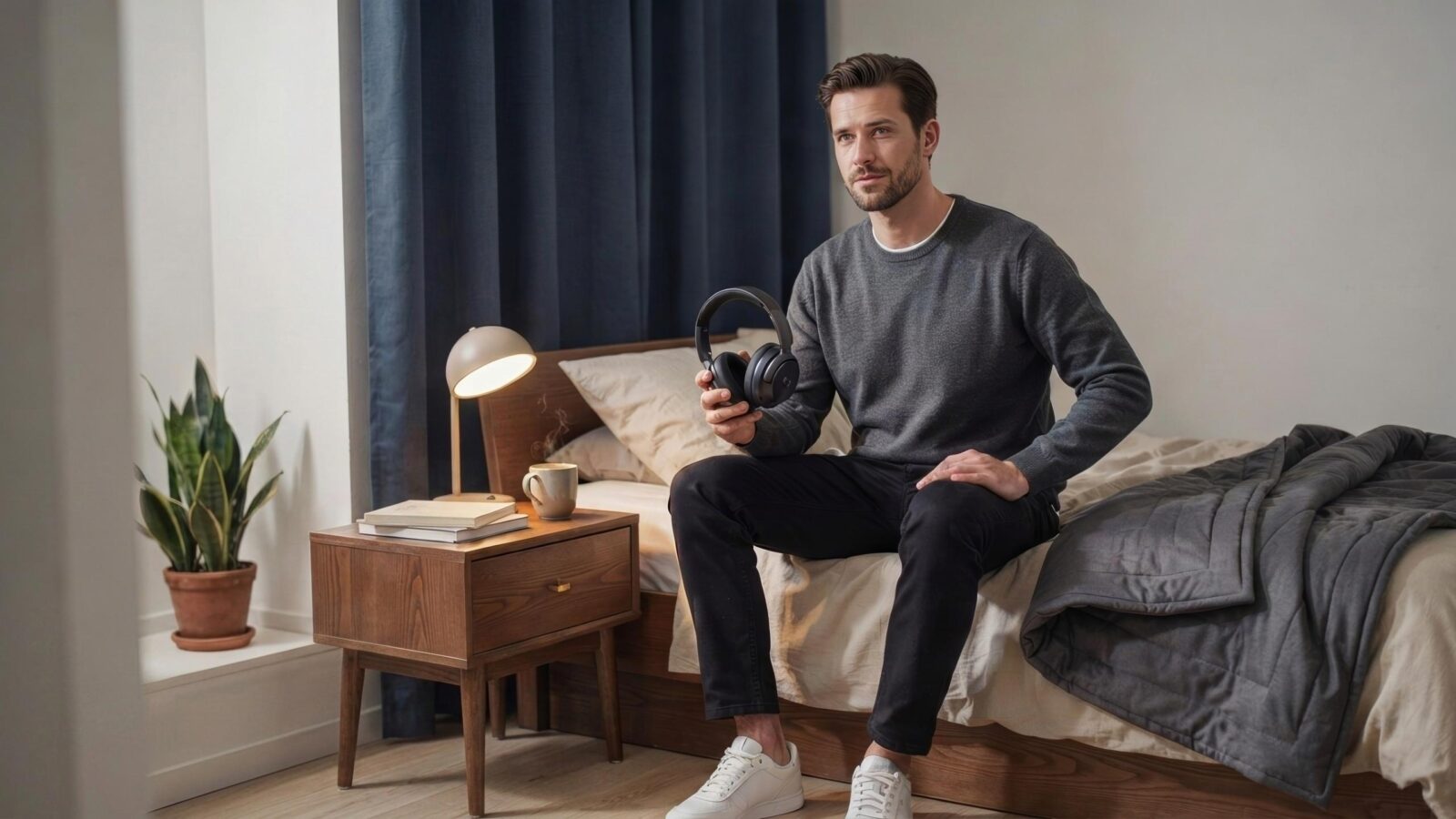
2. Active Noise Canceling Headphones
Noise is a genuine health hazard, and the World Health Organization treats it as such. Its environmental noise guidelines link chronic road, rail, and aircraft noise to sleep disturbance and cardiovascular risk at specific decibel thresholds, and those thresholds are well below what many people live with every day.
Habituation to noise is incomplete. You stop consciously hearing traffic or the air handler in the ceiling long before your body stops responding to it. During sleep, that response fragments sleep stages without necessarily waking you.
Active cancellation uses microphones and inverted sound waves to cut steady low-frequency sound. That happens to be the exact range of foam and padding that handles the worst. Background noise, ventilation, aircraft cabins, the flat hum of an open office. All of it drops away.
The relief comes from removing a mental load you were carrying without knowing it. Shop for active noise cancellation instead of thick ear cups alone, since passive isolation kills high frequencies and blocks all the background noise.
3. Bright Light Therapy Lamps
Light sets your internal clock, and morning light is the strongest correction available to you. Specialized retinal cells called intrinsically photosensitive retinal ganglion cells feed timing information to the suprachiasmatic nucleus in the hypothalamus, which runs the schedule for everything downstream.
When that clock drifts, the symptoms show up as bad sleep timing, flat mornings, and alertness that arrives at eleven at night. Your baseline stress load climbs while nothing in your actual life has changed.
Bright light therapy has its strongest evidence base in seasonal affective disorder. The standard protocol uses a 10,000-lux light box for about 30 minutes shortly after waking, and it has been studied in that population for decades. Work on non-seasonal depression and on circadian rhythm disorders looks encouraging, with results that vary more from trial to trial.
Buy a lamp with UV filtering and set it off to one side while you eat breakfast or answer emails, close enough that the light reaches your eyes without you having to stare at it. Timing matters more than buyers expect. The same lamp switched on at nine at night pushes your clock in the wrong direction.
4. Blackout Curtains or a Real Sleep Mask
Darkness at night is a biological requirement. Light suppresses melatonin release from the pineal gland, and the amount needed to blunt that signal is smaller than most people assume.
A 2022 study from Northwestern University tested this directly. Healthy adults slept one night in near darkness and one night in moderate room light, and the light night raised heart rate during sleep and left them with reduced insulin sensitivity the following morning. One night. Ordinary indoor lighting. A measurable metabolic cost.
Deep slow-wave sleep and REM both support emotional regulation and memory consolidation. Break them up, and the next day feels harder for reasons you can’t name. Street lights, a standby LED on the television, and a four-thirty sunrise in June are the usual culprits in a bedroom that otherwise seems fine.
Curtains solve the problem at the room level; it’s better if you sleep in the same bed most nights. A contoured mask that keeps pressure off the eyelids travels well, and for shift workers and frequent flyers, it does more real work than curtains ever could.
5. An Essential Oil Diffuser With Lavender
Smell reaches the brain by an unusual route, arriving at limbic structures tied to emotion and memory without the same thalamic relay the other senses use. That anatomy explains why a scent can change how a room feels before you have consciously worked out what you are smelling.
Lavender is the most studied option. Its main aromatic constituents are linalool and linalyl acetate. Reviews of aromatherapy trials tend to report modest reductions in self-reported anxiety. However, the studies are usually small and nearly impossible to blind properly, since everyone in the room knows what they are smelling.
The strongest clinical evidence for lavender concerns an oral preparation studied for anxiety, which is a different product from anything coming from a diffuser. Popular explanations involving GABA receptors are plausible and still unsettled. This is the softest evidence base of the five, and honest labeling would acknowledge as much.
Treat the diffuser as a cue instead of a treatment. Cold-mist ultrasonic unit, pure oil, same spot in the evening every night, and after a few weeks, the smell alone starts telling your brain the day is finished. It is cheap, low risk, and useful.
Conclusion
None of these five asks you to feel calmer by deciding to do so. Each one changes an input your nervous system is already responding to, whether that input is pressure, sound, the timing of light, the absence of it, or scent.
Spend in order of evidence. Add darkness at bedtime and morning light first; noise reduction second; the weighted blanket after that; the diffuser last, and only if you like the smell. You can’t buy your way out of a stressful life. You can stop paying the hidden tax on sleep and sensory load that most people carry around without ever noticing the charge.