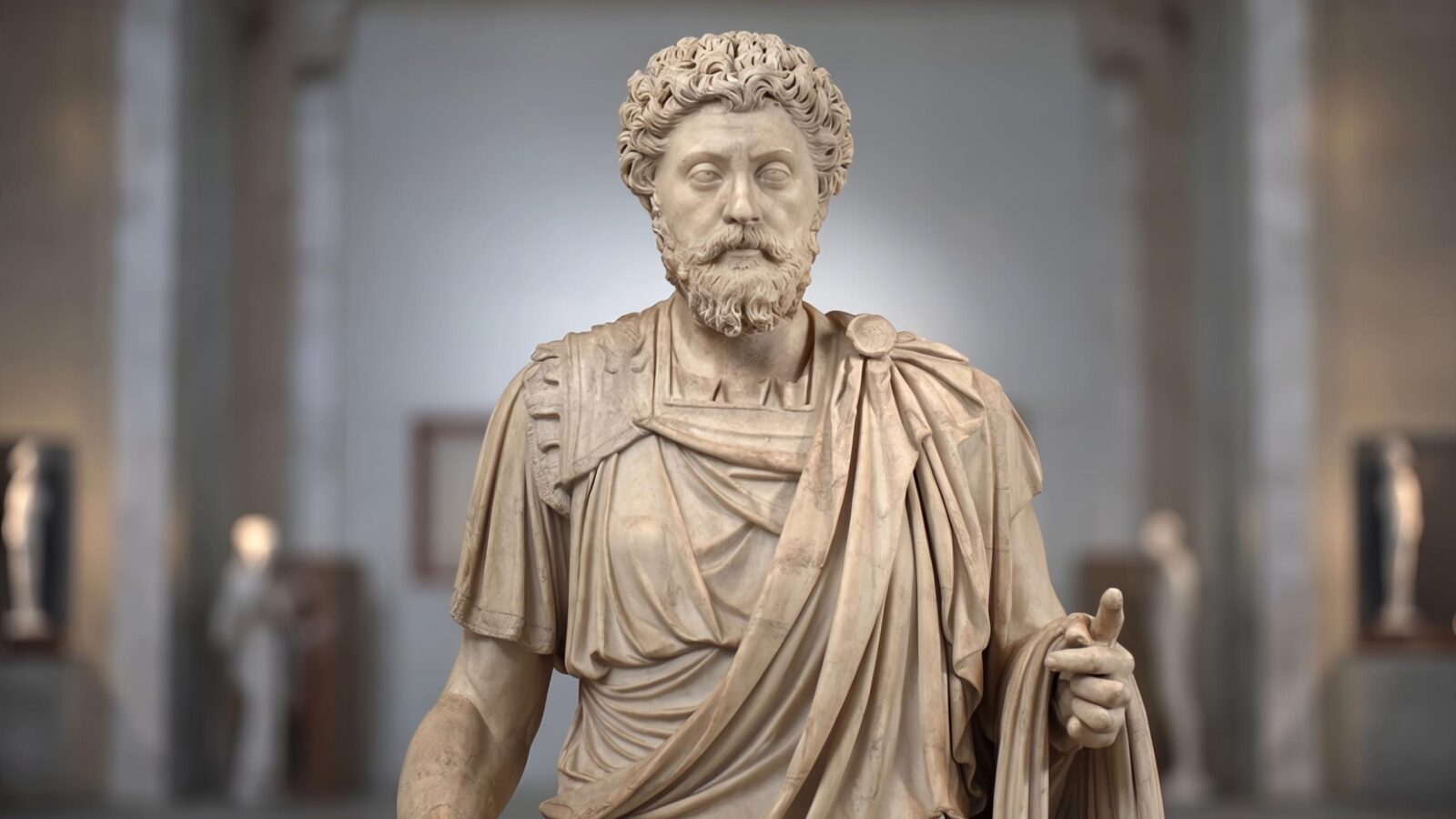
Pressure can narrow a person’s field of vision. A tense conversation, a business loss, an illness, or a failed plan can take over the day. Marcus Aurelius ruled during wars and political conflict, yet his private writing returns to the same refuge: the stability and consistency of his mind.
Marcus Aurelius used the term Inner Citadel for that refuge. “The mind which is free from passions is a citadel, for man has nothing more secure to which he can fly for refuge and for the future be inexpugnable. He then who has not seen this is an ignorant man; but he who has seen it and does not fly to this refuge is unhappy.” — Marcus Aurelius, Meditations 8.48
The image fits his teaching. A person can protect judgment and character even when outward circumstances become difficult. Here are 7 Stoic lessons for staying mentally strong under pressure, drawn from Marcus Aurelius’ writings in his personal journal.
1. Put Your Attention on Your Own Response
“Thou hast power over thy mind, not over external events. Realize this, and thou wilt find strength.”
– Marcus Aurelius, Meditations
People lose mental energy when they try to control what belongs to chance or to someone else. Another person may act badly. A market can fall. Careful plans can meet a hard stop. Marcus Aurelius brought his attention back to judgment, conduct, and choice because those remained his responsibility.
That approach does not call for passivity. It calls for a clear distinction between the problem itself and the futile effort to control every outcome. Choose a response that is honest and useful, then do the work in front of you. A steady mind holds its ground when the result is still unknown.
2. State the Facts Before Adding a Story
“The universe is change: life is opinion.” – Marcus Aurelius, Meditations 4.3
Aurelius practiced seeing an event clearly before giving it a dramatic meaning. An insult is speech from another person. A delay means the expected result has not arrived. A loss requires an assessment, and sometimes a change of plan. It does not prove that everything is ruined.
This discipline matters when fear is moving fast. Write down the plain facts, then separate them from the prediction that came with them. The situation may still hurt, and it may demand serious action. It becomes easier to act well after every fearful thought is no longer treated as evidence.
3. Keep a Quiet Inner Place Within Reach
“Nowhere can a man find a quieter or more untroubled retreat than in his own soul.” – Marcus Aurelius, Meditations 4.3
A change of setting can bring relief. Aurelius saw a limit to that kind of escape. A peaceful room can’t settle a mind that carries its agitation into the room. The safer refuge is the habit of pausing, reviewing your principles, and returning to the next necessary act.
It takes practice for that pause to become available during a hard day. A few quiet minutes before work, a moment before replying, or a written review at night can help. The aim is to meet responsibility without letting urgency or another person’s mood take over your thinking.
4. Use the Obstacle as Motivation
“The mind adapts and converts to its own purposes the obstacle to our acting.” Marcus Aurelius, Meditations 5.20
Stoicism does not ask anyone to enjoy bad news. It asks for an honest look at what the roadblock gives you a chance to practice. A setback can test patience. Criticism can test whether you listen before defending yourself. A hard decision can test courage and judgment.
This idea has much in common with amor fati, the willingness to work with life as it arrives. An obstacle may force a different route. It does not have to reduce your standards or make you bitter. When adversity becomes material for character, pressure has less power to break concentration.
5. Focus Only on Today’s Tasks
“Do not disturb thyself. Make thyself all simplicity.” Marcus Aurelius, Meditations 2.7
Under strain, the mind often tries to live through future months and old mistakes at the same time. It rehearses disasters that have not happened, then replays what can’t be changed. The present task disappears under that load. Aurelius urged himself to handle the life directly in front of him because it was the part open to choice.
Bring the problem down to the next useful action. Make the call that needs to be made. Finish the work that is due. Speak in a calm tone, even when it is difficult. Preparation for the future begins with work done properly today.
6. Refuse to Add Bitterness to Injury
“Take away thy opinion, and then there is taken away the complaint, ‘I have been harmed.’ Take away the complaint, ‘I have been harmed,’ and the harm is taken away.” – Marcus Aurelius, Meditations 4.7
This teaching does not deny real pain, betrayal, or injustice. Marcus Aurelius separates the event from the damage that anger can do inside a person. A loss may require a firm response. An unfair act may require a boundary or a serious effort to correct it.
Another injury begins when resentment makes a person cruel, fear makes a person dishonest, or anger produces reckless conduct. You can take action and still refuse to let another person’s behavior decide your own. That is a difficult standard. It also protects the part of you that pressure most often tries to reach.
7. Step Back and See the Wider Perspective
“Consider the immensity of time behind thee, and the time which is before thee, another boundless space.” – Marcus Aurelius, Meditations 12.32
One bad moment can seem to fill the whole horizon. Aurelius fought that feeling by considering time, changing human affairs, and the many people who had faced their own urgent troubles. The wider view does not make personal pain disappear. It can stop a temporary crisis from becoming the whole story of a life.
Awareness of mortality can sharpen the same perspective. Life is brief, which makes grudges, vanity, and panic expensive uses of attention. Kindness, honest work, and time with people you love deserve more. A wider view helps you decide what should stay important after the immediate pressure passes.
Conclusion
“Waste no more time arguing what a good man should be. Be one.” – Marcus Aurelius, Meditations 10.16
The Inner Citadel grows through repeated choices. Each time you separate facts from fear, return to the current task, or choose fairness over resentment, you strengthen it. Pressure will still arrive. Your response can remain your own, even on a bad day.
Marcus Aurelius offers no promise of a painless life. He asks for mental self-control and focused mental effort, starting with your own mind, when life gets difficult. That standard remains useful because it directs attention toward the one place where a person can still act with purpose, within.