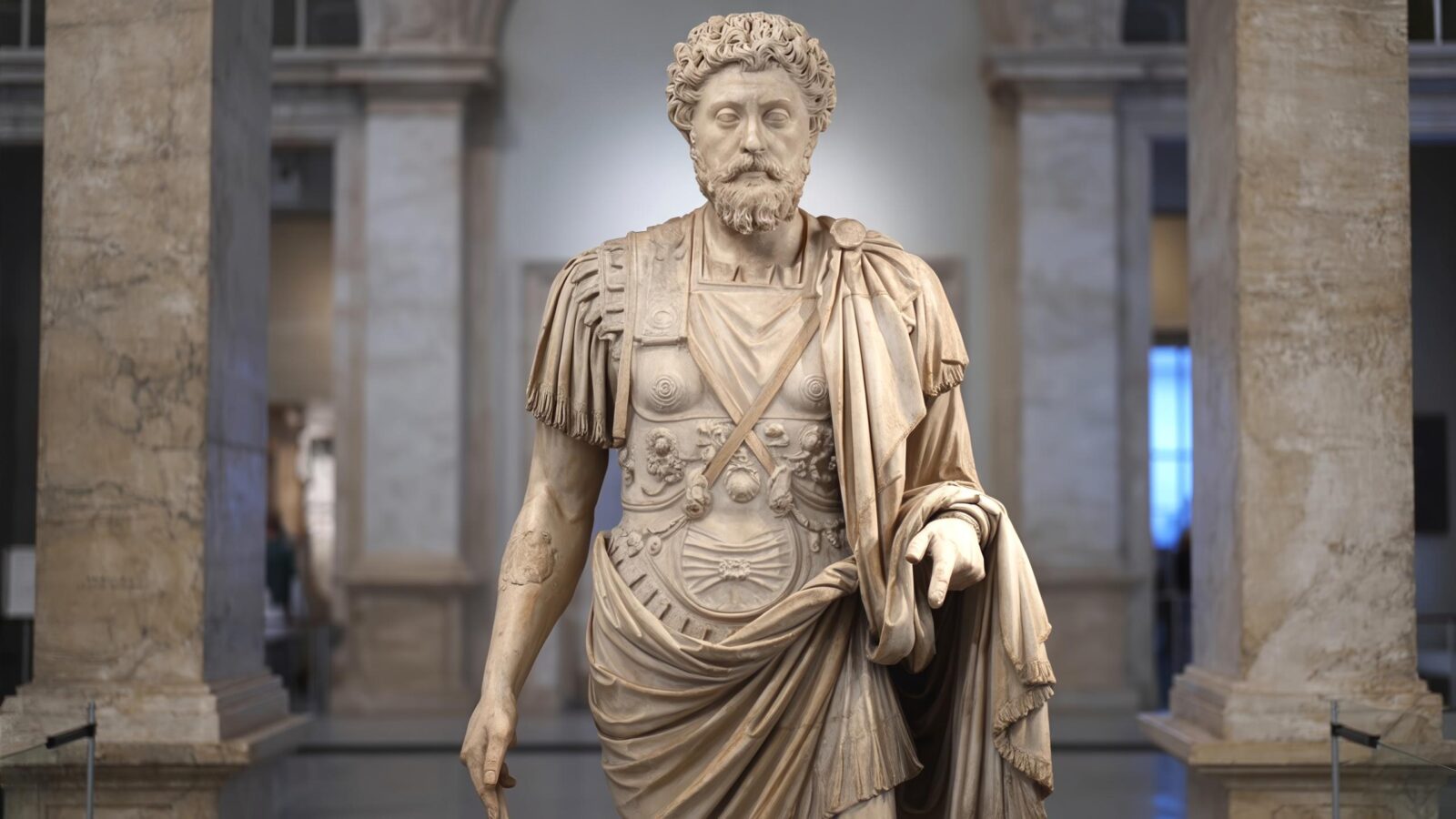
Marcus Aurelius ruled Rome from 161 to 180 AD. Plague swept the empire during his reign, war kept him on the northern frontier for years, and one of his most trusted generals, Avidius Cassius, declared himself emperor in 175.
Through it all, he kept a private notebook in Greek. We call it Meditations, though he never meant for anyone else to read it.
The quotes below come from George Long’s 1862 translation. The ten principles they support still work for anyone dealing with a rough week or a trade that went the wrong way. Following these 10 Stoic principles helps maintain mental strength in any situation.
1. Focus Only on What You Control
“If thou art pained by any external thing, it is not this thing that disturbs thee, but thy own judgment about it. And it is in thy power to wipe out this judgment now.” (Marcus Aurelius)
Start by splitting your problems into two piles. One holds the things you can influence, and the other holds everything else, which is usually the bigger pile. The economy sits in that second pile. So do your boss’s mood and a stranger’s opinion online. Your judgment and your next move stay with you.
When something goes wrong, figure out which pile it belongs in before spending energy on it. If it’s out of your hands, put the effort into your own response.
2. Change How You See Events
“Take away thy opinion, and then there is taken away the complaint, ‘I have been harmed.’ Take away the complaint, ‘I have been harmed,’ and the harm is taken away.” (Marcus Aurelius)
Marcus argued that an event carries no built-in meaning. We supply it, and then we suffer from the story we told ourselves.
Pay attention to the words running through your head. “This is a disaster” hits differently than “the plan didn’t work and I need a new one,” though the facts are identical.
3. Use Obstacles as Fuel
“The mind converts and changes every hindrance to its activity into an aid… and that which is an obstacle on the road helps us on this road.” (Marcus Aurelius)
The Stoics didn’t see hardship as a detour. For them, the setback was the training.
So when a plan collapses, look at what it’s forcing you to be mentally strong. Maybe you can use the circumstance to build your patience. It might also mean getting resourceful with half the budget you expected, or swallowing your pride to call someone for help. Use obstacles to grow more mentally strong by using them to develop yourself.
4. Stay in the Present
“Let not future things disturb thee, for thou wilt come to them, if it shall be necessary, having with thee the same reason which now thou usest for present things.” (Marcus Aurelius)
Anxiety borrows trouble from next month. Regret keeps reopening last year, and carrying both at once wears you out without fixing anything.
Shrink your focus to this hour. When a crisis feels too big to think about, find the single next step that makes sense and do it. It is much easier to stay mentally strong in the present moment than when you are imagining the past and future through mental time traveling.
5. Build an Inner Citadel
“Nowhere either with more quiet or more freedom from trouble does a man retire than into his own soul.” (Marcus Aurelius)
Marcus pictured the mind as a fortress he could retreat into at any time, and he wrote some of these notes while on campaign along the Danube. Criticism and noise only get inside your psyche if you open the gate of the mind to accepting negative thoughts as accurate.
The practical version is simple. Before you answer a text that made you angry, let a few breaths pass between the trigger and whatever you say back.
6. Zoom Out
“Look to the immensity of time behind thee, and to the time which is before thee, another boundless space.” (Marcus Aurelius)
Marcus kept returning to the size of time and space. Against that backdrop, an argument with a coworker or a bad quarter shrinks to its real proportions.
Next time stress takes over, picture yourself five years from now looking back at this moment. Then push it out to fifty years and see how much of today’s panic still matters.
7. Accept That Nothing Lasts
“Time is like a river made up of the events which happen, and a violent stream… as soon as a thing has been seen, it is carried away, and another comes in its place, and this will be carried away too.” (Marcus Aurelius)
Pain passes. So does success, though people tend to forget that during a good run.
In a hard stretch, say it plainly to yourself: this phase will end. Hardship gets easier to carry once you treat it like weather that will move on.
8. Expect Trouble Before It Arrives
“Begin the morning by saying to thyself, I shall meet with the busy-body, the ungrateful, arrogant, deceitful, envious, unsocial.” (Marcus Aurelius)
Look at how Marcus started his day. He listed the kinds of difficult people he expected to meet, and in that same passage, he wrote that none of them could injure him.
The habit takes the shock out of bad news. Before a big meeting or a high-stakes day, spend a few minutes picturing what could go sideways and decide how you’ll handle it.
9. Keep Your Own Scorecard
“I have often wondered how it is that every man loves himself more than all the rest of men, but yet sets less value on his own opinion of himself than on the opinion of others.” (Marcus Aurelius)
Praise feels good and is almost completely unreliable. If your peace of mind depends on applause, other people are holding the controls.
Grade yourself on what you own, like the effort you put in and whether you acted with integrity. Public opinion swings constantly, but your standards don’t have to follow it.
10. Serve Something Bigger Than Yourself
“That which is not good for the swarm, neither is it good for the bee.” (Marcus Aurelius)
Marcus saw people as social creatures built to work together. That outward focus pays off for you too, because it’s hard to stay stuck in your own head while you’re busy helping someone.
On a day when self-pity sets in, do one useful thing for another person. Call a friend who’s having a rough time or help a coworker finish a task, and the mood usually lifts faster than it would if you sat around analyzing it.
Conclusion
Marcus Aurelius wrote these ideas for himself while running an empire under heavy strain. He kept returning to the same handful of reminders, which tells you he needed them more than once, too.
You don’t need a throne to put them to work. Pick one principle this week, maybe the two piles or the five-year test, and try it the next time something goes wrong.