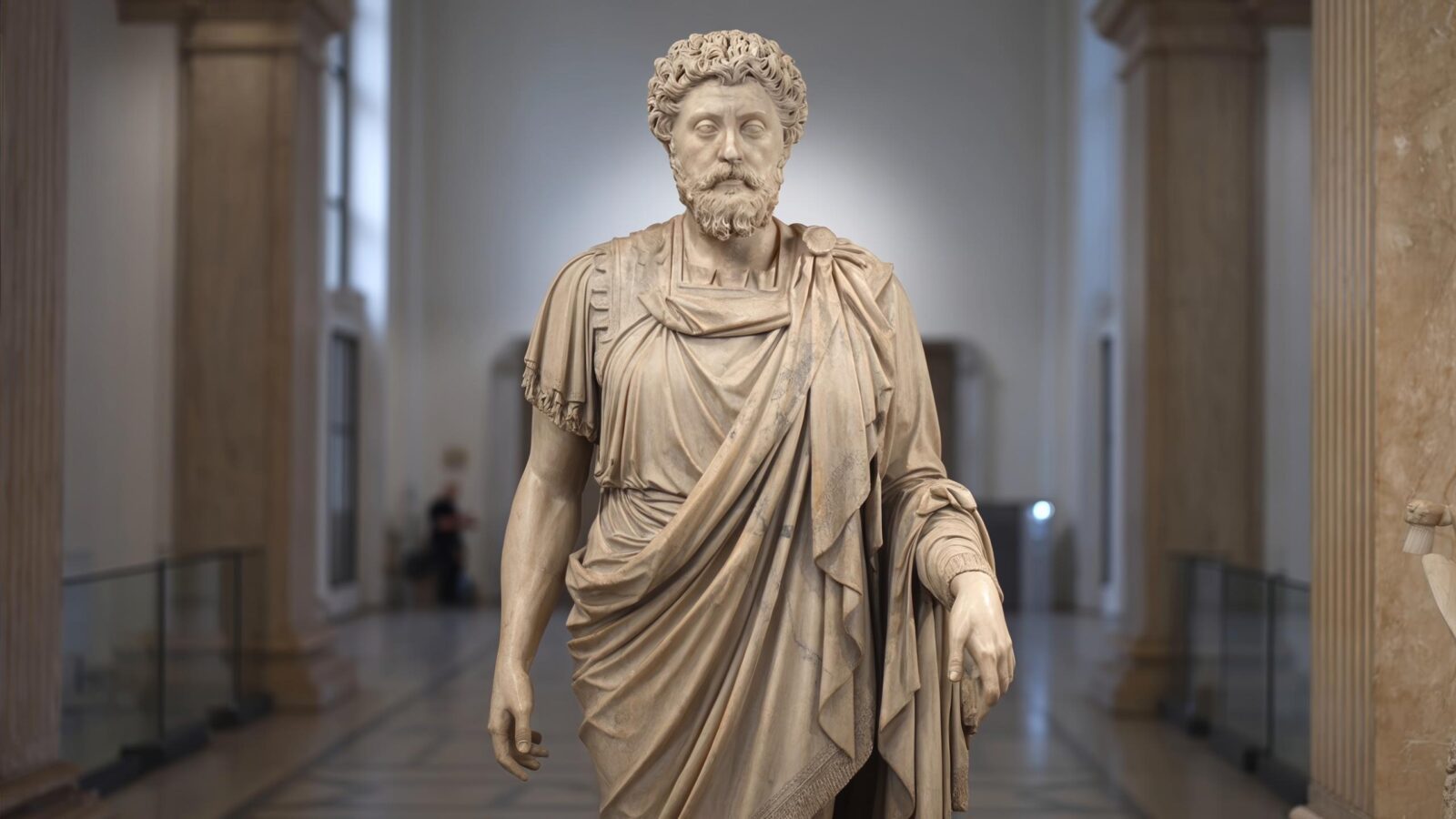
Discipline gets harder when life turns messy. A schedule breaks down, someone creates conflict, money gets tight, or a task drags on long after the early enthusiasm has faded. The Roman Emperor Marcus Aurelius faced pressures most people will never carry, yet his private writing returns to a simple practice: direct the mind toward the right action available now.
His notes in Meditations read like working instructions for a person trying to remain disciplined in their actions and thoughts. They are spare, practical, and often stern. The five rules below give discipline a firmer foundation than mood, inspiration, or a perfect set of circumstances.
1. Stoic Discipline Rule #1: Govern Your Judgment, Not Events
“The things which are external to my mind have no relation at all to my mind.” – Marcus Aurelius
A bad outcome can arrive without warning. The market can fall, a client can leave, a stranger can be rude, or traffic can eat up an hour you had planned to use. Each event may call for a response, yet none of them requires you to give away your judgment.
Marcus Aurelius separated the event from the story added to it. The delay is a fact. Calling it a disaster, proof of failure, or a reason to abandon the day is a judgment. Discipline begins when you catch that judgment before it starts directing your behavior.
Ask for the next action that falls within your reach. You can prepare better, speak carefully, change a plan, protect your capital, or leave a bad conversation. That shift moves attention from complaint to responsibility, where useful action can begin.
There is no prize for carrying anger after its usefulness has expired. Put your energy into the decisions that you still control.
2. Stoic Discipline Rule #2: Do What Is Necessary
“If thou seekest tranquillity, do less. Or do what is necessary.” – Marcus Aurelius
Most days contain far more invitations than obligations. Messages arrive. Small tasks multiply. Other people want immediate answers. A person can stay busy from breakfast until bedtime and still avoid the one task that would actually improve the day.
Marcus Aurelius had a useful test for that problem: do what is necessary. Before you add something to the calendar, respond to another distraction, or join an argument, decide whether it serves a real duty. If it does, give it your full attention. If it does not, let it pass.
This takes some nerve because unnecessary activity often feels safer than meaningful work. Busywork offers quick completion and little risk. The important task may expose weak skills, invite criticism, or demand sustained concentration. Discipline means choosing the most important task rather than the easiest one.
3. Stoic Discipline Rule #3: Keep Your Attention on the Current Task
“Do every act of thy life as if it were the last.” – Marcus Aurelius
An entire year can feel heavy enough to stop a person before he starts. So can a long project, a major financial goal, or a difficult change in health. The mind races ahead and builds a burden out of work that has yet to arrive.
Break big jobs down into their immediate tasks. Open the document and write the next paragraph. Make the call. Review the chart, do the workout, or read the first page of the study. Small actions gain force when they receive undivided attention.
Marcus Aurelius was not arguing against planning. Plans matter, especially when the stakes are high. His point was that discipline lives in the act underway, not in the imaginary future where every outcome has already been settled.
4. Stoic Discipline Rule #4: Turn Obstacles into Training
“The mind converts and changes every hindrance to its activity into an aid; and so that which is a hindrance is made a furtherance to an act.” – Marcus Aurelius
People often expect progress to feel smooth. Then a rejection, delay, mistake, or personal conflict arrives and breaks the rhythm. That is usually the point where discipline matters most, because frustration wants a quick exit.
A setback can become practice for a specific quality. A delay gives you a chance to show patience and prepare more carefully. A mistake gives you material for an honest correction. A difficult person gives you a chance to act with restraint instead of letting irritation take over.
This does not make hardship pleasant. It gives hardship a purpose. The obstacle stays real, yet it no longer gets to decide whether the day has value or whether you continue with your responsibilities.
5. Stoic Discipline Rule #5: Choose Purpose Over Comfort
“In the morning, when thou risest unwillingly, let this thought be present: I am rising to the work of a human being.” Marcus Aurelius
Comfort has a strong voice, especially early in the morning or near the end of a demanding day. It suggests another hour in bed, another video, another delay before the conversation you have been avoiding. The suggestion often sounds reasonable because it promises immediate relief.
Purpose gives you a way to answer it. You have roles to fill and standards to meet, whether that means preparing for work, caring for family, keeping a promise, or dealing honestly with a problem. A chosen standard can carry you through a low-energy day when enthusiasm has gone missing.
Rest belongs in a disciplined life too. Rest restores attention and judgment, while avoidance leaves the real task waiting in the background. Learn the difference by looking at the result: one leaves you ready to return to your work, while the other leaves you postponing it.
Conclusion
Marcus Aurelius treated discipline as clear judgment followed by useful action. Keep your response under your own command, cut away the extra noise, stay with the task at hand, use friction as practice, and work from purpose when comfort makes its appeal. Those habits give you something solid to rely on when the day goes sideways.
Life will keep producing inconvenient conditions. You do not need ideal conditions to act with discipline, patience, and self-control. Start with the next duty in front of you, then give it the quality of attention it deserves.