
Charlie Munger passed away in November 2023, a little over a month short of his 100th birthday. He spent most of his career as Warren Buffett’s partner at Berkshire Hathaway, answering shareholder questions with a bluntness that made him famous.
He never published a tidy list of rules for getting rich. If you read his speeches and the transcripts from decades of annual meetings, though, the same handful of ideas keeps coming back, and wealthy investors tend to follow them without talking about them much.
Most people find these ideas boring. Here are five of them, with Munger’s own words and a little arithmetic attached.
1. The Rule of Inversion: Eliminate Folly Before Seeking Performance
Munger liked to cite the German mathematician Carl Jacobi, who told students to invert hard problems and work them backward. With money, that means you start by asking what would wipe you out.
Charlie Munger put it this way: “All I want to know is where I’m going to d*e, so I’ll never go there.” He was joking, but only partly.
Run the numbers on a big loss. Drop 50%, and you need a 100% gain to get back to even, while a 75% drop requires a 300% gain before you’ve made a dime.
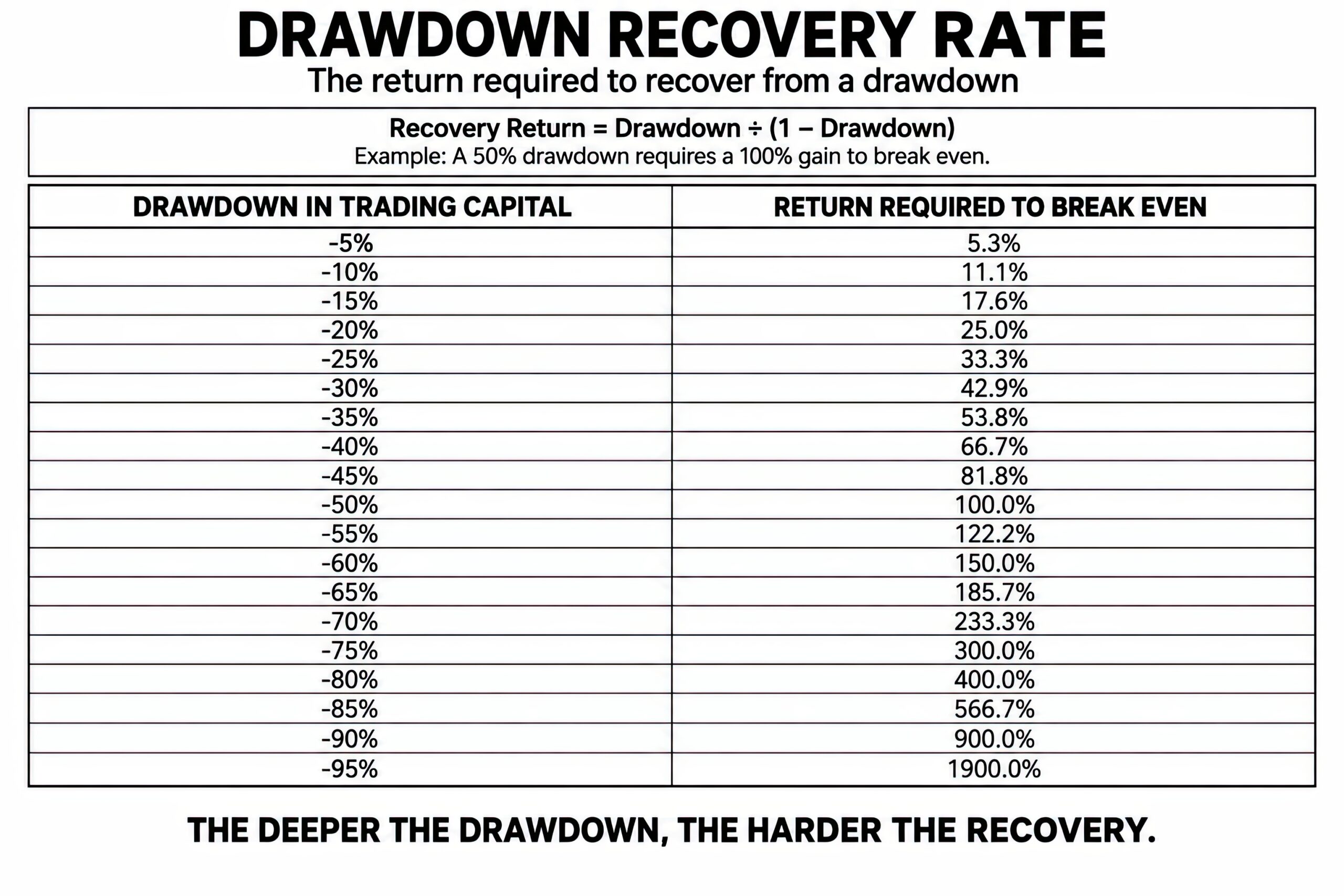
Climbing out of a hole like that can eat up years. During that stretch, your money is repairing damage instead of growing.
So wealthy investors stay away from heavy margin debt. They also skip speculative bets they can’t explain to a friend simply and quickly, because a permanent loss of capital resets the compounding clock back to zero.
2. The Compounding Capital Mandate: Never Interrupt Capital Unnecessarily
Compounding needs to be left alone. Each time you pull gains out, pay a tax bill, or hand a manager a fee, the base that next year’s growth builds on shrinks a little.
Charlie Munger said, “The big money is not in the buying and selling, but in the waiting.” Few people have the stomach for that waiting.
Start with $10,000 compounding at 10% annually for 30 years, and it grows to about $174,494. If taxes and fees consume 30% of each year’s return, the net return falls to 7%. That same $10,000 then grows to roughly $76,123.
Same portfolio, same 30 years, but the drag costs about $98,371, or 56% of the potential ending balance. That is why long-term investors often benefit from holding quality assets and limiting unnecessary taxes and management fees.
3. The Circle of Competence: Measure Your Edge in Concrete Terms
Munger thought every investor understands a small slice of the business world well. Step outside that slice and you’re guessing, even when it feels like analysis.
Charlie Munger warned, “You have to figure out what your own aptitudes are. If you play games where other people have the aptitudes, and you don’t, you’re going to lose.” He held himself to that standard and passed on whole industries he didn’t understand.
A simple test helps here. You should be able to explain how the company makes money and roughly what its free cash flow looks like, and you should know what could go wrong on its balance sheet.
Munger and Buffett looked for businesses earning high returns on invested capital, protected by competitive advantages they called moats. If you can’t say why a company should still earn strong returns ten years out, it probably sits outside your circle.
Buying there means trading against someone who knows more than you do. That person is usually happy to sell to you.
4. The Waiting Game: Cash Is an Option on Future Bargains
Lots of investors get twitchy holding cash. They feel every dollar has to be invested at all times, while Munger saw cash as the ability to move fast when something great finally showed up.
Charlie Munger said, “It takes character to sit there with all that cash and do nothing. I didn’t get to where I am by going after mediocre opportunities.” Berkshire Hathaway often carried tens of billions of dollars in cash and Treasury bills while critics complained that the money was sitting idle.
In calm markets, plenty of people overtrade and chase average returns. A patient investor holds reserves and waits for prices to get silly. Then a crisis hits, and the roles reverse. Scared sellers dump good businesses at low prices, and whoever kept cash on hand gets to buy them.
Berkshire did exactly this during the 2008 financial crisis. It put billions into Goldman Sachs and General Electric on terms ordinary investors couldn’t get.
5. Concentrated Allocation: Bet Heavily When the Odds Are Overwhelming
Owning a hundred stocks protects you from your own ignorance. It also pretty much locks in average results, and Munger preferred a few positions he understood deeply.
Charlie Munger said, “The wise ones bet heavily when the world offers them that opportunity. They bet big when they have the odds. And the rest of the time, they don’t. It’s just that simple.” Opportunities like that are rare, so he sized them to match the value and probabilities of future gains.
Gamblers and mathematicians will recognize the logic of the Kelly Criterion here, a formula that sizes a bet according to your edge and the odds. When the chance of winning is high and the chance of permanent loss is low, the formula recommends betting more.
Berkshire’s record leans heavily on a small group of big decisions. Coca-Cola and Apple became enormous holdings, and the See’s Candies purchase taught Munger and Buffett what a great business was really worth.
Concentration without the other four rules is dangerous. A big bet outside your circle, made with borrowed money in a hurry, can sink you.
Conclusion
Munger’s approach to money had no secret tricks. He avoided big mistakes, let compounding run for decades, and stayed inside what he understood, then held cash and waited until the odds were obviously in his favor before betting big.
Anyone with a brokerage account and some patience can do this. Most people won’t, because it means looking foolish while everyone else seems to be getting rich faster.
Charlie Munger summed it up: “It is remarkable how much long-term advantage people like us have gotten by trying to be consistently not stupid, instead of trying to be very intelligent.” Coming from one of the most successful investors of his era, it’s a surprisingly modest standard.
Write down your own version of these five rules and keep it next to your screen. Then check your next trade against it before you click buy.