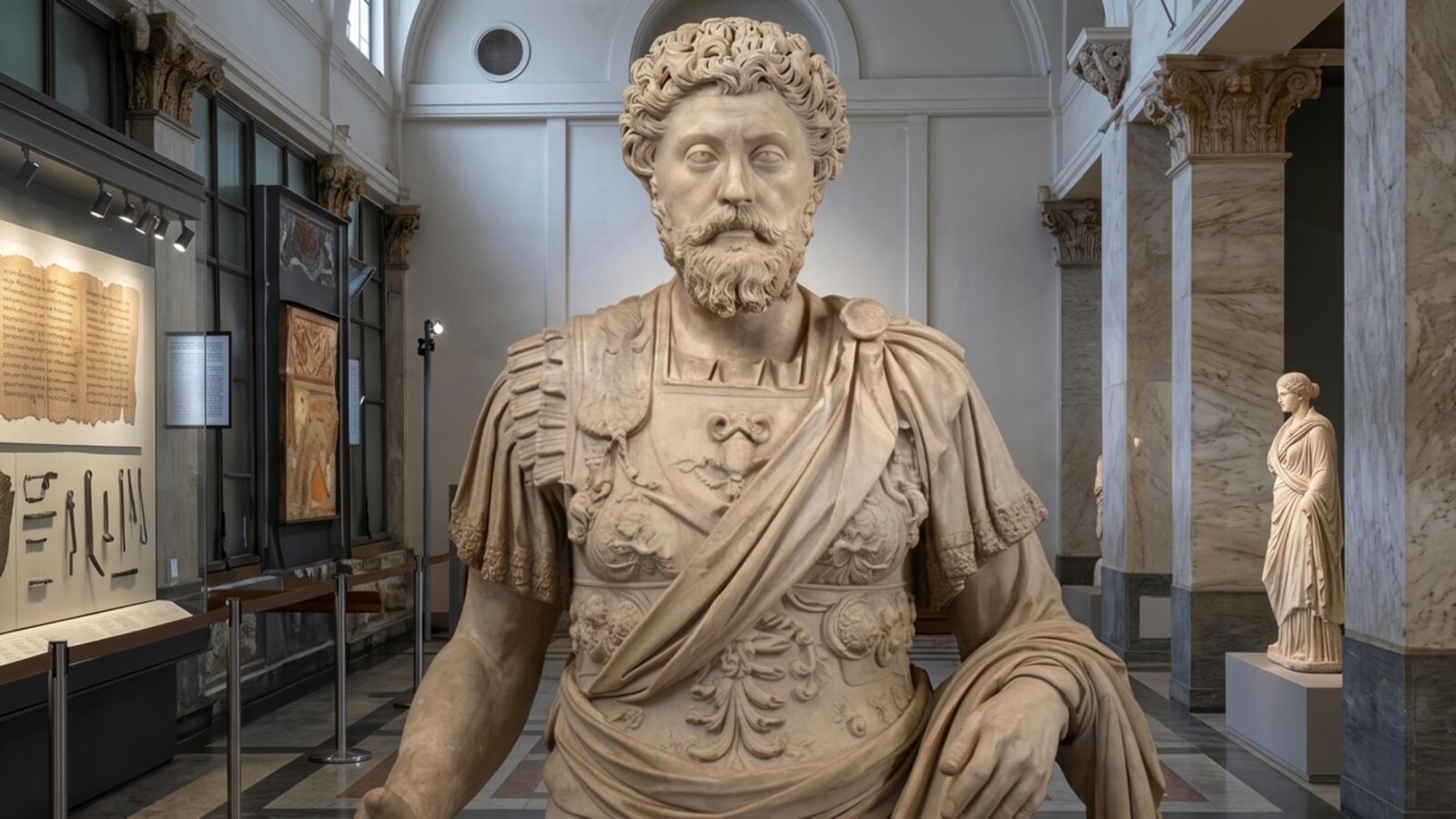
Marcus Aurelius ran the Roman Empire through years of war on the northern frontier and a plague that spread across his territory. During those years, he kept a private journal, which became the book we now call Meditations.
He never meant for anyone else to read it. The entries are reminders to himself, written in plain language by a man who was tired, busy, and often frustrated with the people around him.
The French scholar Pierre Hadot described three disciplines running through the book. Modern writers usually shorten them to perception, action, and will; together, they cover how you think, how you work, and how you handle the things you have no say over.
1. The First Key to Achieving Anything: Master How You See Every Setback
Everything starts in your head. Before you can make a good decision, you have to see what actually happened, minus the story you tell yourself about it.
A client cancels. A stock you bought drops hard overnight, and suddenly your whole week feels ruined. Marcus argued that each of those is just an event, and the pain we feel comes from what we pile on top of it afterward.
“If thou art pained by any external thing, it is not this thing that disturbs thee, but thy own judgment about it. And it is in thy power to wipe out this judgment now.” – Marcus Aurelius
Look at the last word of that passage. He says the judgment can be wiped out now, today, by choice, which puts the misery you feel about a setback squarely in your own hands.
This takes practice. Most of us label events the instant they happen, calling them disasters or proof that nothing ever works out, and then we react to the label as if it were the event itself.
“Take away thy opinion, and then there is taken away the complaint, ‘I have been harmed.’ Take away the complaint, ‘I have been harmed,’ and the harm is taken away.” – Marcus Aurelius
Try a small exercise the next time something goes wrong. Write down only what happened in plain words and leave out every adjective. Then pick one thing you’ll do about it in the next hour.
2. The Second Key to Achieving Anything: Take Focused Action Every Day
Seeing clearly gets you halfway there. You still have to do the work, and Marcus was hard on himself about doing it well.
He wanted each task done with full attention, as though it were the only thing on his plate. Half-hearted effort bothered him, and so did a mind that kept drifting to whatever came next.
“Every moment think steadily as a Roman and a man to do what thou hast in hand with perfect and simple dignity…” – Marcus Aurelius
Even emperors had trouble getting out of bed. Book 5 opens with Marcus arguing with himself about exactly that, and it reads like something a modern person would write today.
“In the morning, when thou risest unwillingly, let this thought be present: I am rising to the work of a human being. Why then am I dissatisfied if I am going to do the things for which I exist and for which I was brought into the world? Or have I been made for this, to lie in the bedclothes and keep myself warm?” – Marcus Aurelius
His own answer is no. He admits the warm blankets feel good, yet he decides he was made for work, so comfort doesn’t get the deciding vote.
He also believed that problems could push you forward rather than hold you back. In the same book, he wrote about the mind turning whatever blocks it into fuel, and he closed the thought with one short line.
“…that which is an obstacle on the road helps us on this road.” – Marcus Aurelius
Plenty of people learn this the hard way. A layoff pushes someone to finally pick up the skills they kept putting off. A rejected proposal shows you what the buyer really cares about, and the next pitch is sharper because of it.
3. The Third Key to Achieving Anything: Accept What You Can’t Control. Focus Effort On What You Can
The third discipline is about accepting what you can’t change. You can think clearly and work hard and still lose, because economies crash and people walk out of your life.
Marcus Aurelius saw fighting that reality as a waste of energy. He’d rather spend his strength on his own choices and his own character, the two things nobody could take from him.
“Adapt thyself to the things with which thy lot has been cast: and the men among whom thou hast received thy portion, love them, but do it truly, sincerely.” – Marcus Aurelius
Stoic acceptance still takes effort. You look at the situation as it really is, stop wishing it were different, and put your energy where it can do some good.
He pushed the idea further than most of us would be comfortable with. Whatever happens, he says, belongs to the thread of your own fate and deserves your love.
“Love that only which happens to thee and is spun with the thread of thy destiny. For what is more suitable?” – Marcus Aurelius
That’s a big ask on a bad day. Even a partial version of it saves the hours you’d otherwise spend insisting things should have gone differently, and those hours add up over a year.
He gave himself a picture to hold onto when things got rough. It’s one of the best-known images in the whole book.
“Be like the promontory against which the waves continually break, but it stands firm and tames the fury of the water around it.” – Marcus Aurelius
Picture a rocky headland on a stormy coast. The waves hit it for hours, sometimes for days, and when the weather clears, the rock is still there with calm water at its base.
Conclusion
Marcus left behind a plan that fits on an index card. See events for what they are, do your work with full attention, and accept what sits outside your control while working in the direction of your destiny.
The pieces lean on each other. Clear thinking makes better action possible, while acceptance keeps a rough week from knocking you completely off course.
His notes have survived for close to two thousand years, mostly because ordinary readers keep finding them useful. Copy one passage from this article onto a card and keep it by your desk this week.