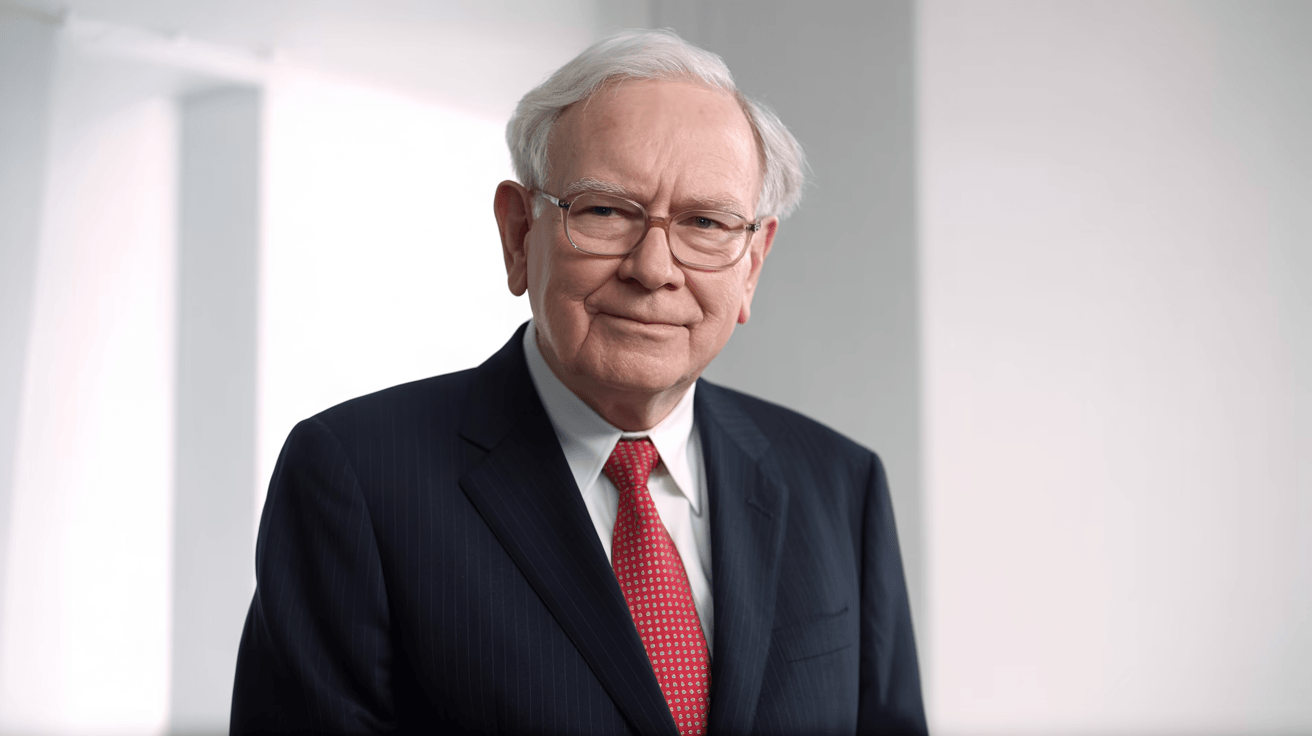
Warren Buffett has spent decades building one of the greatest fortunes in history, and he has been remarkably open about the financial traps that derail ordinary people from building lasting wealth. His warnings are not just about what to buy.
They are equally about what to stop buying. These five spending and investing habits quietly destroy wealth for millions of people, and Buffett has addressed each of them directly throughout his career.
1. Anything Purchased With High-Interest Debt
Buffett has been blunt about the danger of carrying high-interest consumer debt. He understands compounding better than almost anyone alive, and he knows that compounding works against you just as powerfully as it works for you.
When interest rates on debt climb into double digits, no investment can reliably outpace what you are losing. Buffett has said plainly, “If you’re paying 18% or 20% interest, you’re going to be broke.” That is not a gentle suggestion from Warren Buffett. It is a direct warning.
Credit cards and high-interest consumer loans allow people to finance lifestyle purchases that depreciate immediately. The car, the vacation, and the furniture, when financed over time, cost far more than the sticker price once interest is factored in.
Every dollar paid in high-interest charges is a dollar that will never compound. Before focusing on investments, Buffett’s logic demands that high-interest debt be eliminated first.
2. Stocks Bought Based on Hype or Tips
Buffett has watched generations of investors chase hot stocks, act on friends’ tips, and buy into speculative frenzies, only to suffer significant losses. The pattern repeats itself in every market cycle, and it always ends the same way for undisciplined buyers.
He famously described his approach by saying, “You don’t have to swing at every pitch.” Patience and selectivity are core to his method, and chasing hype is the opposite of both.
When a stock is dominating financial news, driving social media conversation, and generating widespread excitement, that is often the moment when rational analysis gives way to emotion. The price already reflects the crowd’s enthusiasm, and the margin of safety has disappeared.
Buffett buys businesses he understands at prices that make sense based on fundamentals. He does not buy based on what someone else thinks the stock will do next month.
3. Things You Don’t Understand
One of Buffett’s most consistent teachings across decades of shareholder letters and public appearances is the importance of staying within your circle of competence. He has applied this principle to stocks, businesses, financial products, and large purchases of all kinds.
“Never invest in a business you can’t understand,” Buffett has said, and this principle extends well beyond the stock market. Complex financial instruments, opaque investment schemes, and products with hidden terms all share the same flaw. They require the buyer to trust something they can’t evaluate for themselves.
When you can’t explain how something works, how it generates returns, or what the real risks are, you are operating blind. That is not investing. It is speculation dressed up in complicated language.
Buffett has stayed away from entire sectors of the market for this reason, famously avoiding many technology companies during the early internet boom because he did not feel he could accurately predict their economics. He chose to pass rather than guess.
4. Over-Diversified, Low-Conviction Investments
Diversification is widely recommended across the financial industry, and for most investors, it serves a valuable protective purpose. But Buffett has pushed back on the idea that spreading money across dozens or hundreds of positions without a genuine understanding creates real wealth.
He has said, “Diversification is protection against ignorance.” His point is that excessive diversification is often a substitute for doing the hard work of actually understanding what you own.
When a portfolio holds too many positions, strong performance from a few great ideas is diluted by the mediocrity of the rest. The investor ends up with average results at best, and a false sense of safety at worst.
Buffett has concentrated his bets on businesses he understands deeply and trusts completely. That level of conviction requires real knowledge. Owning random assets across sectors to feel diversified is not a strategy. It is a way of avoiding the discipline that genuine investing requires.
5. Status Upgrades That Outpace Asset Growth
Buffett has lived in the same modest house in Omaha, Nebraska, since the late 1950s. He has driven unremarkable cars throughout much of his life. For someone managing one of the world’s largest fortunes, his lifestyle has remained deliberately simple.
He has said, “Price is what you pay. Value is what you get,” and he applies that filter to personal spending as carefully as to business acquisitions. When a purchase is driven by image rather than utility, the value rarely justifies the price.
Lifestyle inflation is one of the most powerful forces working against middle-class wealth building. As income rises, spending tends to rise at the same pace or faster. The bigger house, the newer car, the luxury upgrade all consume the capital that could otherwise be compounding in productive assets.
Buffett’s restraint is not about deprivation. It is about understanding that every dollar spent on status-driven consumption is a dollar that will never work for you again.
Conclusion
Buffett’s most powerful financial edge is not just found in what he buys. It lives equally in what he refuses to buy. High-interest debt, hype-driven stocks, misunderstood products, hollow diversification, and status-driven spending all share a common thread.
They transfer your capital away from compounding and toward consumption, speculation, or someone else’s profit. The wealthy protect their capital first and grow it second. Understanding what Buffett warns against is not just financial education. It is a blueprint for the kind of disciplined thinking that separates those who build lasting wealth from those who only dream about it.