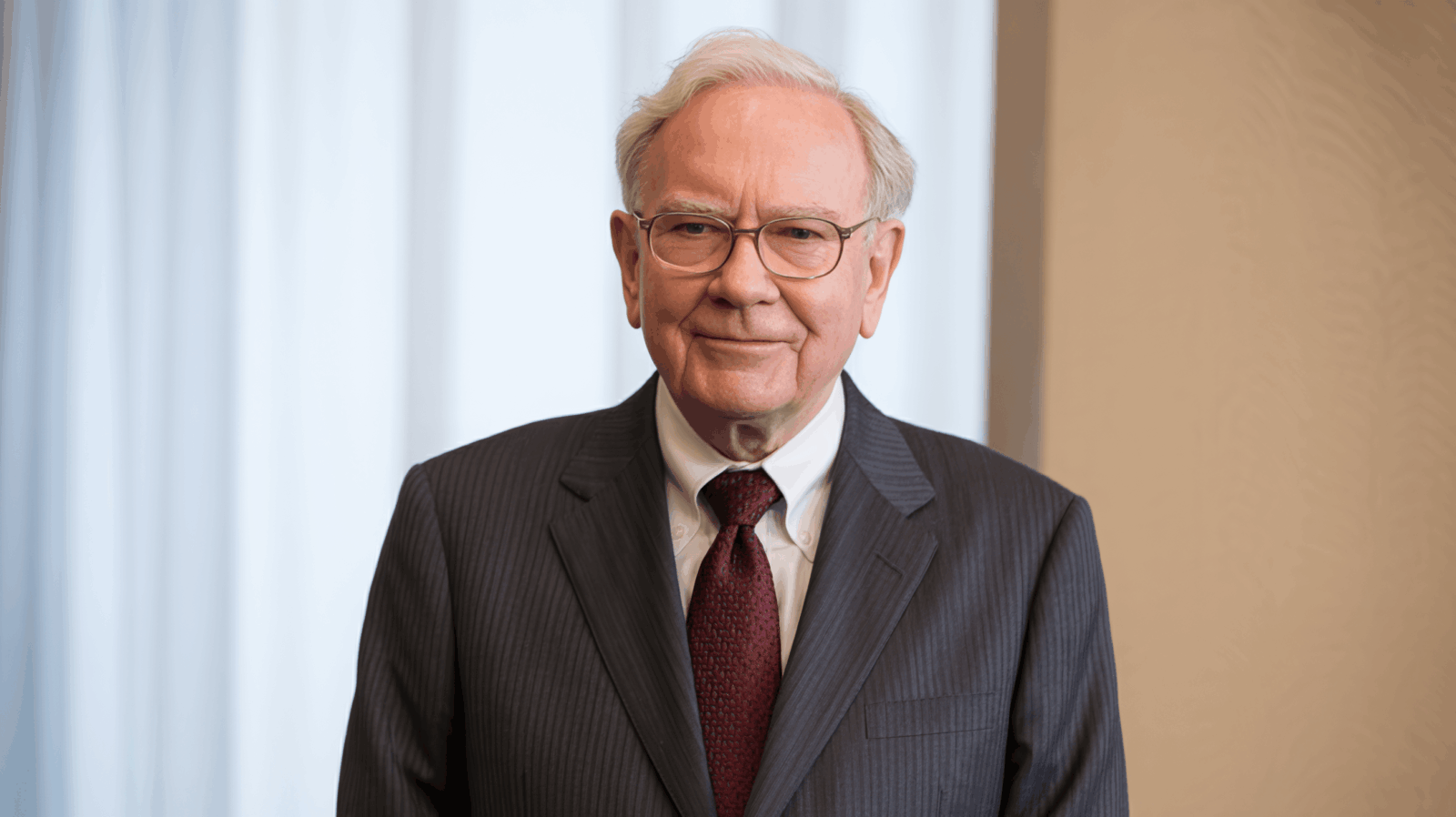
Warren Buffett built one of the greatest fortunes in history without a Bloomberg terminal, a hedge fund salary, or a team of algorithmic traders working around the clock. He did it through patience, discipline, and a set of principles so straightforward that any beginner can understand them.
The challenge has never been the complexity of investing. It has always been the discipline required to follow simple rules when the market is making everyone around you panic or overly confident. Here are the seven investing rules that Buffett has lived by for decades.
1. Never Lose Money
“Rule No. 1: Never lose money. Rule No. 2: Never forget Rule No. 1.” — Warren Buffett
This rule is not about predicting every market downturn or having perfect timing. It is about obsessing over risk management before you ever think about chasing a return.
For a new investor, this means being selective about where you invest and avoiding speculative bets driven by hype. Compounding, the process of earning returns on your previous returns, only works if your original investment stays intact. A significant loss early in your investing journey can take years to recover from, which is why protecting your starting capital is the foundation on which everything else is built.
2. Stay Within Your Circle of Competence
“Never invest in a business you can’t understand.” — Warren Buffett.
Your circle of competence is the collection of industries, businesses, and topics you genuinely understand well enough to make informed decisions about. Buffett built his fortune investing in businesses with simple, predictable models: insurance, consumer goods, banking, and soft drinks. He avoided complex biotech firms and emerging high-tech companies because he couldn’t reliably forecast their futures.
As a beginner, your job is to know what you really know in depth and be honest about what you don’t. A useful test is to try explaining how a company makes money in plain, simple language. If you struggle to do that, it’s a clear signal to walk away and find something you understand better.
Investing in businesses you can actually follow and evaluate gives you a major advantage over investors who are simply chasing whatever looks exciting at the moment.
3. Look for a Durable Competitive Moat
“In business, I look for economic castles protected by unbreachable moats.” — Warren Buffett.
A moat is a competitive advantage that protects a company from rivals over the long run. It can come from a dominant brand that customers are deeply loyal to, high switching costs that make it difficult for customers to switch, proprietary technology that competitors can’t replicate, or the operational scale that allows a company to offer lower prices than anyone else in the market.
Companies with strong moats tend to grow their earnings consistently year after year without having to reinvent themselves every few years to survive. That predictability and durability are exactly what a long-term investor wants.
When you’re evaluating a business as a beginner, ask yourself: what would stop a well-funded competitor from taking this company’s customers? If the answer is “not much,” the moat probably isn’t deep enough.
4. Buy Wonderful Companies at a Fair Price
“It’s far better to buy a wonderful company at a fair price than a fair company at a wonderful price.” — Warren Buffett.
Early in his career, Buffett bought cheap, mediocre companies and sold them once the price recovered slightly. His longtime partner, Charlie Munger, convinced him that the better approach is to find a truly great business and pay a reasonable price for it, then hold it for a long time.
The concept of intrinsic value is central to this rule. Intrinsic value is what a business is actually worth based on its future earning power, separate from whatever price the stock market is currently putting on it.
A margin of safety means buying a stock at a meaningful discount to that estimated intrinsic value, which gives you a cushion against mistakes in your own analysis. Price is what you pay, and value is what you actually get in return.
5. Think in Decades, Not Days
“If you aren’t willing to own a stock for ten years, don’t even think about owning it for ten minutes.” — Warren Buffett.
Buffett treats every stock purchase as partial ownership of a real business, not a ticker symbol to be traded next week. When you buy a share of stock, you are buying a small claim on that company’s future profits, assets, and growth. The daily price movements on your screen are largely irrelevant to whether the underlying business is becoming more or less valuable over time.
New investors often make the mistake of constantly checking their portfolio and reacting to short-term price swings. That behavior tends to lead to buying high during excitement and selling low during fear, which is the opposite of what actually builds wealth.
The stock market has historically rewarded investors who bought quality businesses and held them through inevitable downturns without losing their nerve.
6. Be Fearful When Others Are Greedy
“Be fearful when others are greedy, and greedy when others are fearful.” — Warren Buffett
When markets fall sharply and financial news turns alarming, most investors sell in a panic, locking in their losses. Buffett sees those exact moments as an opportunity to buy high-quality businesses at temporarily reduced prices. A market downturn is not a catastrophe for a long-term investor. It is a sale on assets you would have wanted to own anyway.
The other side of this principle is just as important for beginners to internalize. When markets are surging, and everyone around you seems to be making effortless money, that is precisely when overvalued assets and excessive risk tend to build up in the system.
Crowd behavior and sound investing strategy rarely point in the same direction at the same time, and learning to recognize that gap is one of the most valuable skills you can develop.
7. Use Low-Cost Index Funds
“A low-cost index fund is the most sensible equity investment for the great majority of investors.” — Warren Buffett.
An index fund is a type of investment that automatically tracks a broad market index, such as the S&P 500, which represents a wide cross-section of large American companies across many different industries. Rather than trying to pick individual winning stocks, you own a small piece of all of them at once. This instant diversification means no single company’s failure can devastate your portfolio.
The cost advantage is equally significant. Index funds charge very low annual fees compared to actively managed funds, and those fee savings compound meaningfully over decades. Buffett has publicly stated that this straightforward strategy will outperform the vast majority of professional money managers over a long enough time horizon.
For any beginner who feels uncertain about where to start, a low-cost index fund held consistently over many years is one of the most reliable paths forward that investing history has ever produced.
Conclusion
Warren Buffett’s approach to investing was never built on complexity. It was built on clarity about what actually matters: protecting your capital, understanding what you own, buying quality at a fair price, and holding on long enough for compounding to work in your favor.
The hardest part is not learning the strategy. It is about managing your own emotions when the market behaves irrationally, which it will regularly throughout your investing lifetime.
Keep your costs low, stay within what you understand, think like a business owner rather than a trader, and give your investments the time they need to grow. That is the foundation of everything Buffett has built over a lifetime of disciplined decision-making.