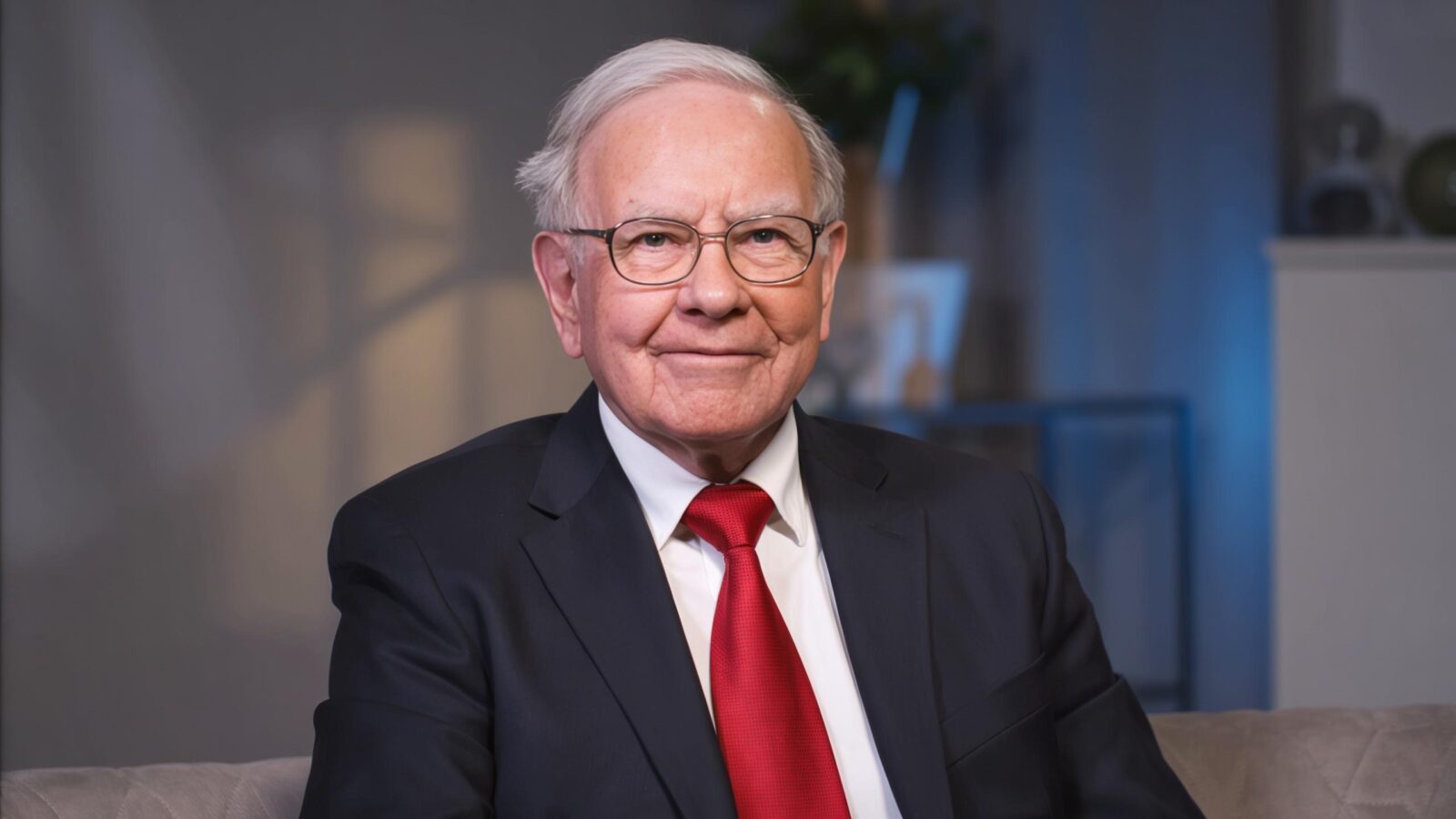
Warren Buffett built one of the largest fortunes in history without inventing a product or founding a new company. He read. As a boy, he went through every investing book in the Omaha public library, some of them twice, and early in his career, he held up a stack of reports for a class at Columbia Business School and told the students, “Read 500 pages like this every day. That’s how knowledge works. It builds up, like compound interest. All of you can do it, but I guarantee not many of you will do it.”
He still spends most of his day in his office, reading. Out of the thousands of books he has gone through across nine decades, five come up again and again in his interviews and shareholder letters. These are the five books he strongly recommends, along with the reasons why.
1. The Intelligent Investor by Benjamin Graham
Buffett bought this book at age 19 and has called it “by far the best book on investing ever written.” Benjamin Graham later became his professor at Columbia, then his boss at Graham-Newman, and Buffett thought enough of him to give his first son the middle name Graham.
Two chapters matter most to him. Chapter 8 introduces Mr. Market, an emotional business partner who shows up daily offering to buy or sell shares at wildly different prices. Chapter 20 covers the margin of safety, the discipline of buying only when the price sits well below a conservative estimate of what the business is worth.
The book trains investors to view a stock as partial ownership of a real company rather than a bet or gamble. In the preface to the fourth edition, Buffett wrote, “To invest successfully over a lifetime does not require a stratospheric IQ, unusual business insights, or inside information. What’s needed is a sound intellectual framework for making decisions and the ability to keep emotions from corroding that framework.”
2. Business Adventures by John Brooks
Bill Gates met Buffett in 1991 and asked him to name the best business book he knew. Gates says the answer came back without a pause. “It’s Business Adventures, by John Brooks. I’ll send you my copy,” Buffett told him, and more than two decades later, Gates admitted he still had that borrowed copy on his shelf.
Brooks published the book in 1969 as a collection of his New Yorker articles. The stories cover episodes like the rise of Xerox and the collapse of the Ford Edsel, corporate history that predates the internet by a generation.
That age is the appeal. Products and markets keep changing while the people running companies keep making the same mistakes, and Brooks documented those mistakes with a reporter’s eye. Overconfidence looked the same in 1962 as it does today.
3. Poor Charlie’s Almanack edited by Peter D. Kaufman
The late Charlie Munger worked alongside Buffett for almost sixty years as Vice Chairman of Berkshire Hathaway. This book gathers his speeches and essays into a single volume, and since Munger died in 2023 at age 99, it stands as the best record of how his mind worked.
Munger organized his thinking around what he called a latticework of mental models. He pulled the big ideas from psychology, physics, history, and mathematics, then stacked them together whenever he faced a decision. The book doubles as a field guide to the mental shortcuts that quietly wreck financial judgment, since Munger spent years cataloging the standard causes of human misjudgment.
Buffett endorsed the book with a line that still appears on its cover. “Scholars have for too long debated whether Charlie is the reincarnation of Ben Franklin. This book should settle the question,” he wrote. Buffett has also credited Munger with moving him past Graham-style bargain hunting and toward buying wonderful businesses at fair prices.
4. The Outsiders by William N. Thorndike
Buffett put this one on the bestseller lists himself. In his 2012 letter to Berkshire shareholders, he described it as “an outstanding book about CEOs who excelled at capital allocation”. He pointed readers to its chapter on Berkshire director Tom Murphy, a man Buffett called “overall the best business manager I’ve ever met.”
Thorndike profiles eight chief executives who ignored the standard corporate playbook. They skipped the splashy acquisitions and the Wall Street road shows. Their focus was narrower: finding the highest return available for each dollar of company cash.
Sometimes the answer was buying back their own stock. Sometimes it was acquiring another business, and sometimes it was sitting on cash for years while analysts complained about the idle money. Murphy ran Capital Cities with such discipline that his smaller company eventually bought the ABC television network, a deal Buffett helped finance.
5. The Little Book of Common Sense Investing by John C. Bogle
Bogle founded Vanguard and created the first index fund available to ordinary investors. Buffett has spent decades telling everyday savers to follow Bogle’s advice rather than trying to copy his own stock-picking.
The book’s argument is blunt. Most people who try to beat the market fail, and the fees they pay along the way make the failure even worse. Costs compound against an investor with the same force that returns compound for one.
Buffett believes this so strongly that his will directs 90 percent of the money left in trust for his wife to be invested in a low-cost S&P 500 index fund. He also saluted Bogle directly in his 2016 shareholder letter, writing, “If a statue is ever erected to honor the person who has done the most for American investors, the hands-down choice should be Jack Bogle.”
Conclusion
Look at what this list leaves out. There is nothing here about speculation, opinions, or cryptocurrencies, and nothing that promises wealth within twelve months.
Each book pushes the same habits from a different angle. Know what you own. Keep your emotions out of your decisions, and give compounding enough time to do its work.
Buffett’s edge was never secret information or a supercomputer brain. He sat in a quiet office in Omaha and read while everyone else watched tickers and chased tips, and the knowledge stacked up year after year until the money followed it.
Reading five books alone won’t make anyone the next Buffett. The habits you can form by putting the lessons of those books into action are available to anyone, though, and this list is the same place he tells people to start.