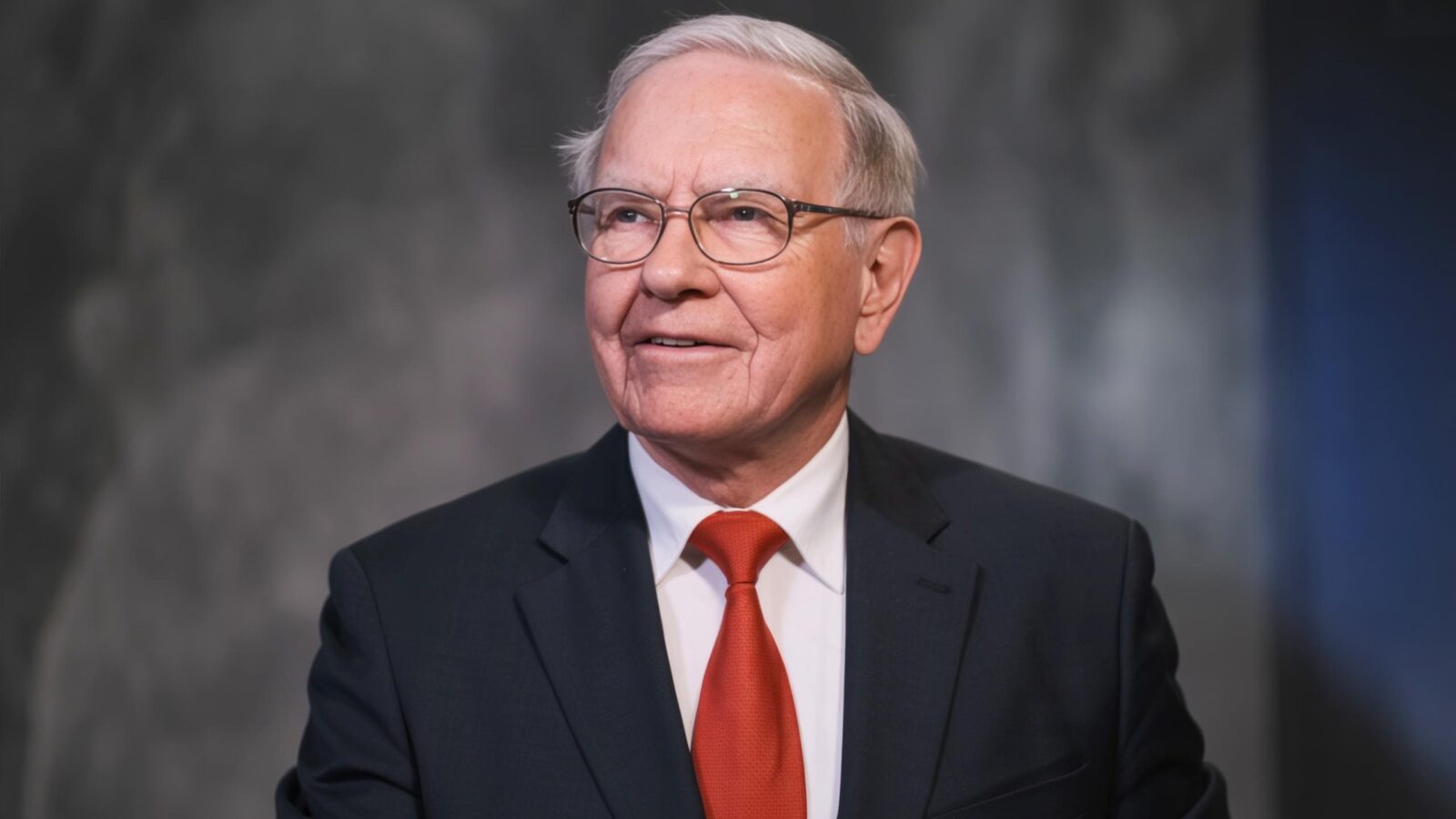
Long before he was known as the “Oracle of Omaha,” Warren Buffett was a fiercely industrious kid with an obsession for numbers and an intense drive to make his own money. He didn’t start with a massive inheritance. His wealth was built on a foundation of childhood side hustles and an early grasp of the power of compounding.
Here is the chronological timeline of the first ten steps Buffett took toward building his fortune. It runs from selling soda bottles as a child to taking control of Berkshire Hathaway as a grown man.
1. The Door-to-Door Salesman
Buffett started his first business venture at age six in 1936. He purchased six-packs of Coca-Cola from his grandfather’s grocery store for 25 cents and sold the individual bottles to neighbors for a nickel each.
That gave him a 20% profit on every six-pack he flipped. He also walked the neighborhood selling chewing gum and weekly magazines, treating each small sale as practice for something bigger down the road.
2. First Stock Purchase
“The stock market is a device for transferring money from the impatient to the patient.” – Warren Buffett.
At age 11 in 1941, Buffett used savings from his odd jobs to buy 3 shares of Cities Service Preferred for himself and 3 shares for his sister Doris at $38 per share. The stock dropped to $27 before rebounding to $40.
He sold at $40 for a small profit. The stock later soared past $200, and he regretted selling so early for years, a lesson in patience that stuck with him for the rest of his investing life.
3. The Paper Route Empire
When his family moved to Washington, D.C. in 1943, the 13-year-old Buffett took up a paper route delivering The Washington Post. He didn’t settle for one simple route.
He ran multiple routes simultaneously and sold calendar subscriptions on the side to boost his earnings. At age 14, he filed his first income tax return and claimed a $35 deduction for his bicycle and watch, a small but telling sign that he was already thinking like a business owner.
4. Becoming a Landlord
By pooling $1,200 of his paper route earnings, the 14-year-old Buffett purchased 40 acres of farmland in Nebraska in 1944. Instead of working the land himself, he rented it out to a tenant farmer.
The move turned his savings into a steady income stream while he was still in high school. It was an early sign of a preference he carried throughout his career: owning assets that generate cash flow without requiring his own labor.
5. The Pinball Machine Venture
At age 15 in 1945, Buffett and a high school friend bought a broken pinball machine for $25 and fixed it up. They convinced a local barbershop owner to let them place it in the back of his shop in exchange for a cut of the coins.
The venture, Wilson’s Coin-Operated Machine Company, grew to include several machines spread across different shops in town. The two teenagers eventually sold the whole operation to a war veteran for $1,200.
6. The GEICO Breakthrough & Omaha Brokerage
“Price is what you pay. Value is what you get.” – Warren Buffett.
While studying at Columbia University in January 1951, Warren Buffett discovered that his professor, Benjamin Graham, was the chairman of GEICO. Curious about its business model, the 20-year-old took a weekend train from New York to Washington, D.C.
He knocked on the doors of the locked headquarters on a Saturday morning until a janitor let him inside. The janitor directed him to the only executive working that day: Lorimer “Davy” Davidson, the company’s financial vice president. Because Buffett was Graham’s student, Davidson spent over four hours explaining the mechanics of the insurance industry to him.
Later that year, after graduating and returning to Omaha to work as an investment salesman at his father’s firm, Buffett-Falk & Co., Buffett put roughly 65% of his personal net worth into GEICO stock. The bet paid off handsomely and cemented his lifelong confidence in concentrated investing
7. Working for Benjamin Graham
“The most important investment you can make is in yourself.” – Warren Buffett.
After being turned down once, Buffett was finally hired by his mentor, Benjamin Graham, at Graham-Newman Corp. in New York in the mid-1950s. His job was to dig through corporate reports searching for what Graham called “cigar butts,” stocks trading for less than their net liquid assets.
The work sharpened his analytical eye and built a lasting habit of demanding a margin of safety before investing in anything. By the time Graham retired in 1956, Buffett had grown his personal investment capital considerably through the lessons he had learned at the firm.
8. Launching the Buffett Partnerships
“Rule No. 1 is never lose money. Rule No. 2 is never forget rule No. 1.” – Warren Buffett.
In May 1956, Warren Buffett returned to Omaha and started Buffett Associates, Ltd. with $105,100 pooled from six family members and friends, contributing a token $100 of his own money.
In the early days, he ran the operation out of a small study off his bedroom. Breaking from standard Wall Street norms, he charged a 0% management fee. Instead, his original terms featured a 50/50 profit split: investors received a guaranteed 4% return, and any gains above that hurdle were divided evenly.
Crucially, Buffett was personally on the hook to absorb 25% of any net losses out of his own pocket. Over the next six years, he established several additional small partnerships before consolidating them all into Buffett Partnerships, Ltd. in 1962.
9. Meeting Charlie Munger
“It’s far better to buy a wonderful company at a fair price than a fair company at a wonderful price.” – Warren Buffett.
Buffett was introduced to Charlie Munger by a mutual friend in Omaha in 1959, and the two hit it off right away. Munger, an attorney who would later become Berkshire Hathaway’s vice chairman, pushed back on the “cigar butt” approach Buffett had leaned on for years.
Munger argued that buying excellent businesses at fair prices beats hunting for cheap but mediocre ones. That shift in thinking opened the door for Buffett to take on much larger acquisitions in the years that followed.
10. Taking Control of Berkshire Hathaway
“Time is your friend, impulse is your enemy.” – Warren Buffett
In 1964, Berkshire Hathaway’s CEO, Seabury Stanton, verbally agreed to buy back Warren Buffett’s shares at $11.50 each, but shortchanged him by an eighth of a point when the written offer arrived at $11.375. Furious at this slight, Buffett spitefully bought up enough shares to seize control of the company and fire Stanton in 1965.
However, this act of defiance backfired; the New England textile mills were structurally dying and acted as a massive financial anchor on his capital for the next 20 years. To salvage the situation, Buffett was forced to build an entirely new financial foundation for the company, using separate funds to acquire National Indemnity Co. in 1967 and later See’s Candies and GEICO.
Buffett later admitted that buying Berkshire out of spite was his “dumbest stock” purchase, estimating it cost him roughly $200 billion in compounded returns compared to starting an insurance holding company from scratch.
Conclusion
What stands out across these ten steps isn’t a single lucky trade or a windfall. It’s a pattern of good decisions made again and again over decades, starting with a six-pack of Coca-Cola and ending with control of one of the largest companies on earth after he got done reinventing it as a coporate conglomerate and holding company.
Buffett’s early life shows that building wealth takes time and can’t be faked. Every hustle, every dollar put back to work, and every lesson absorbed from a mentor like Benjamin Graham added another layer to a foundation that took years to form fully.